



Secondary School Otto-Preminger-Straße
2022
2022
Otto Preminger Straße / Landstraßer Hauptstraße, 1030 Vienna
2022 Competition, recognition
Awarded by: Federal Real Estate Company
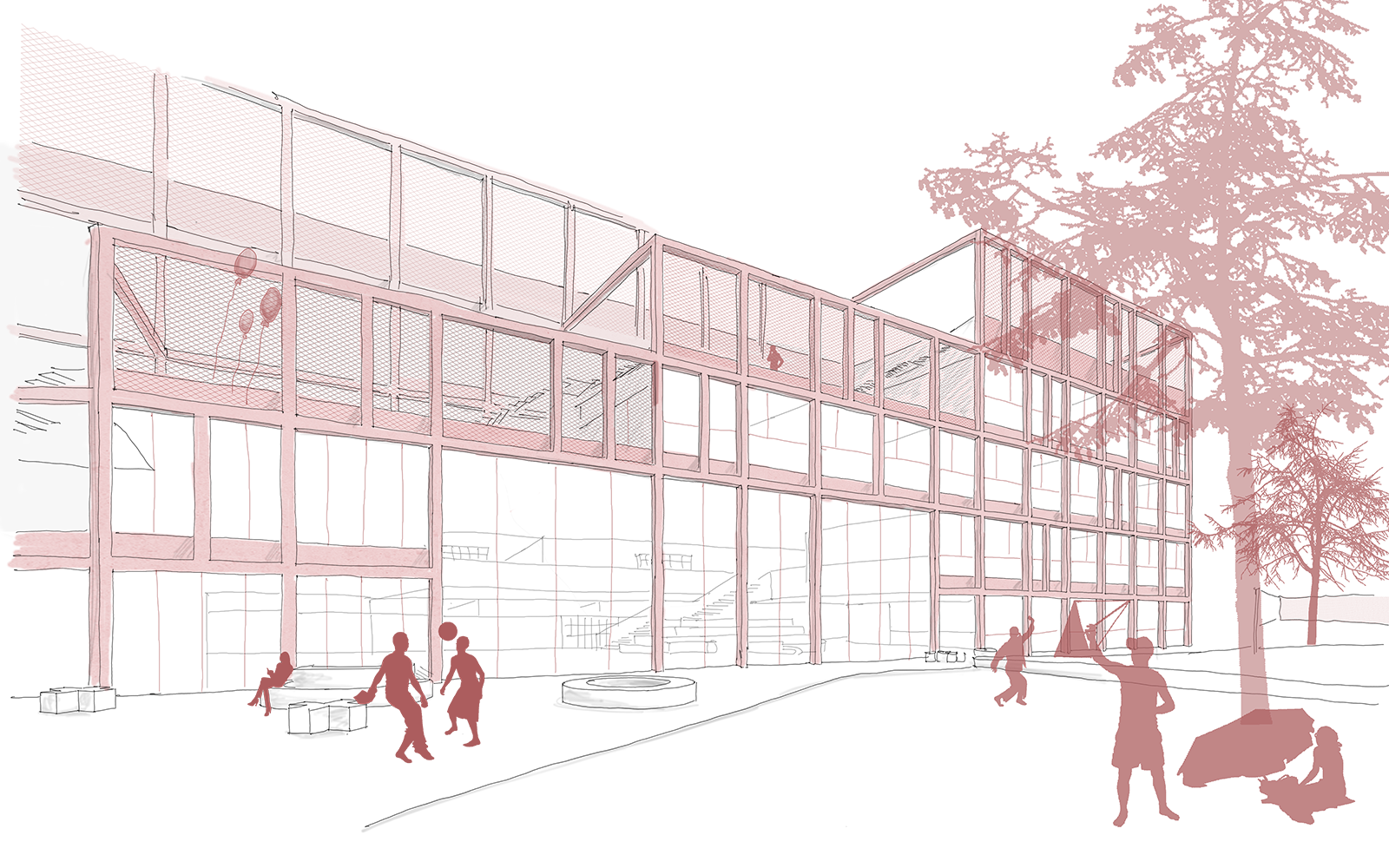
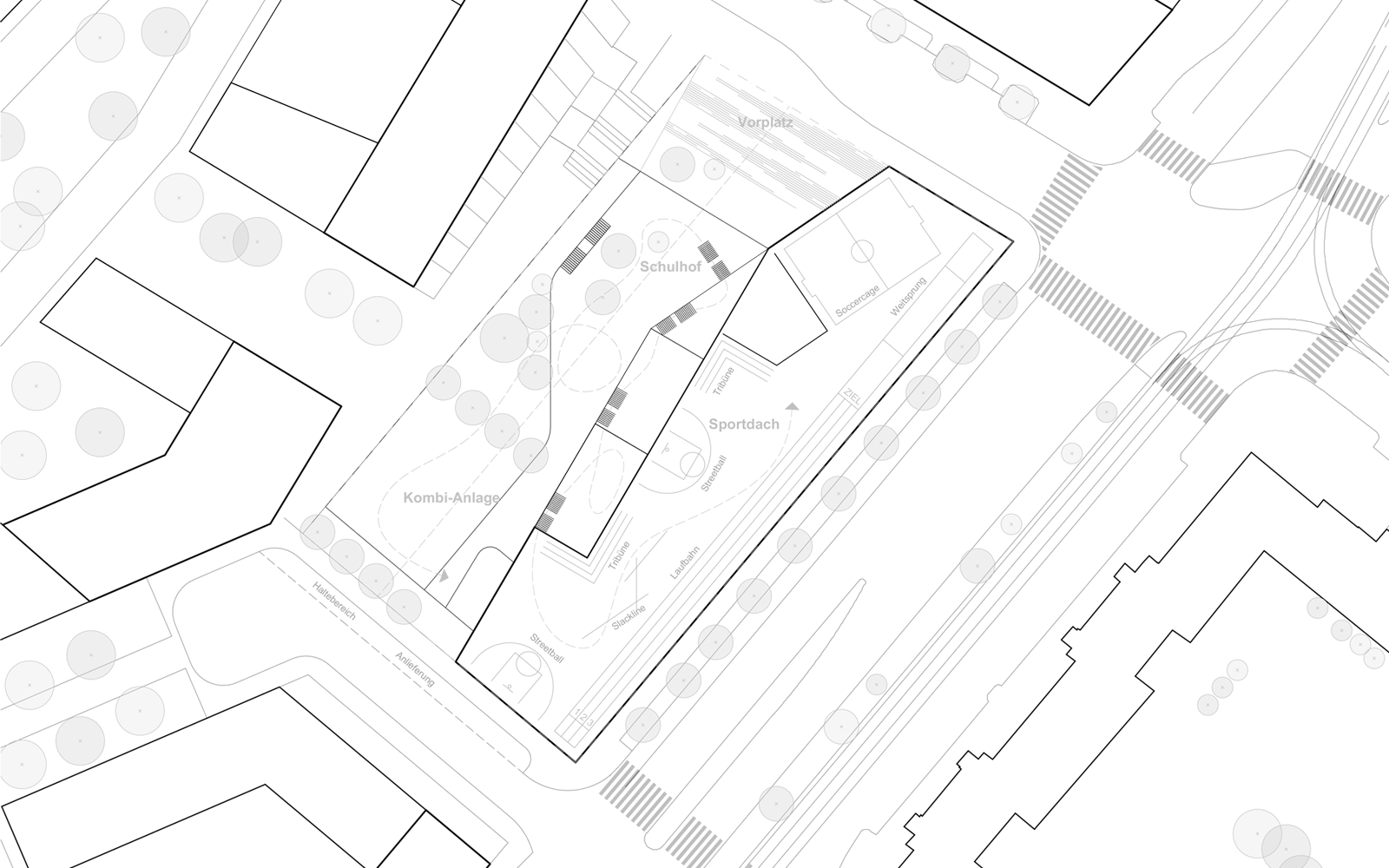
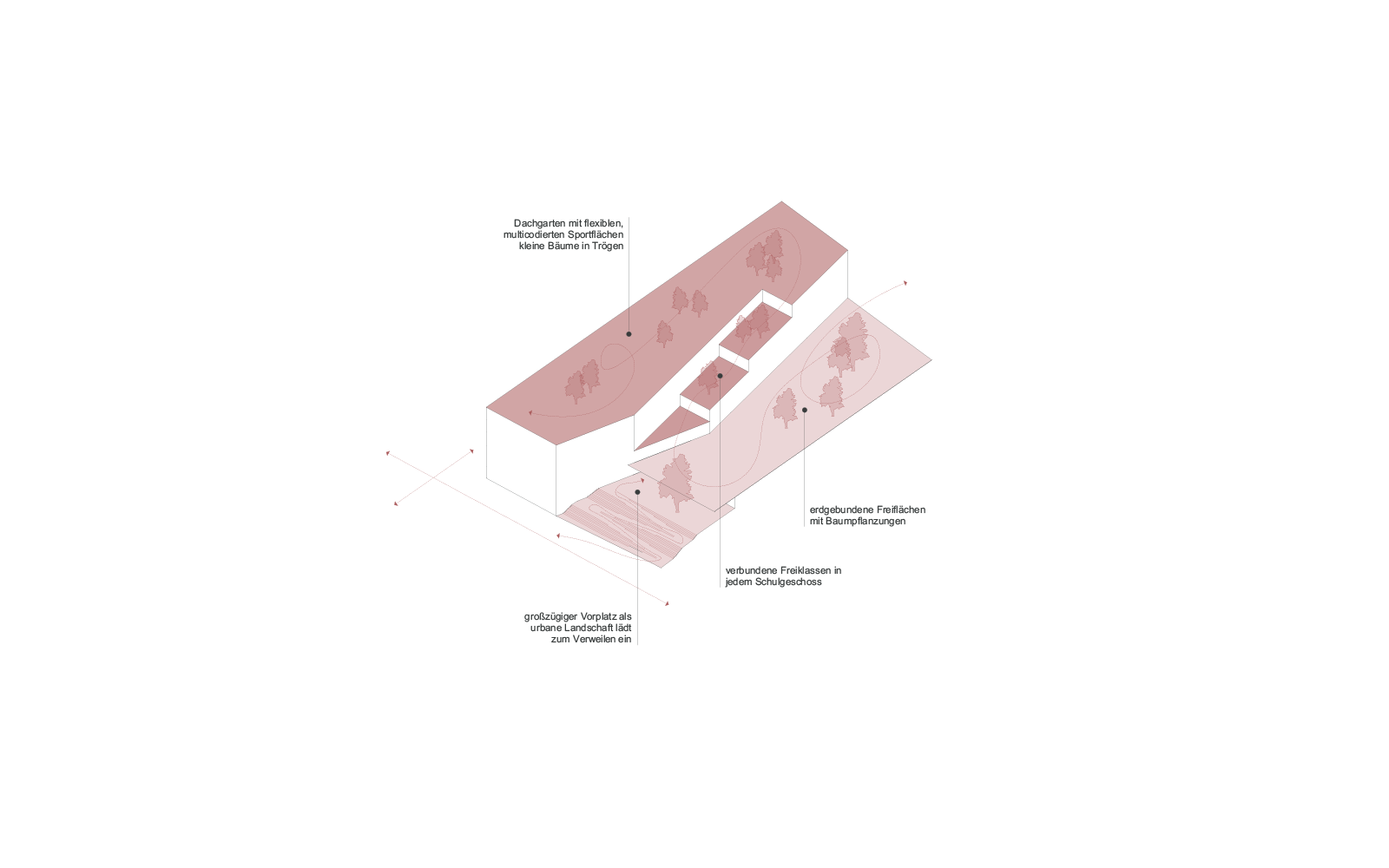
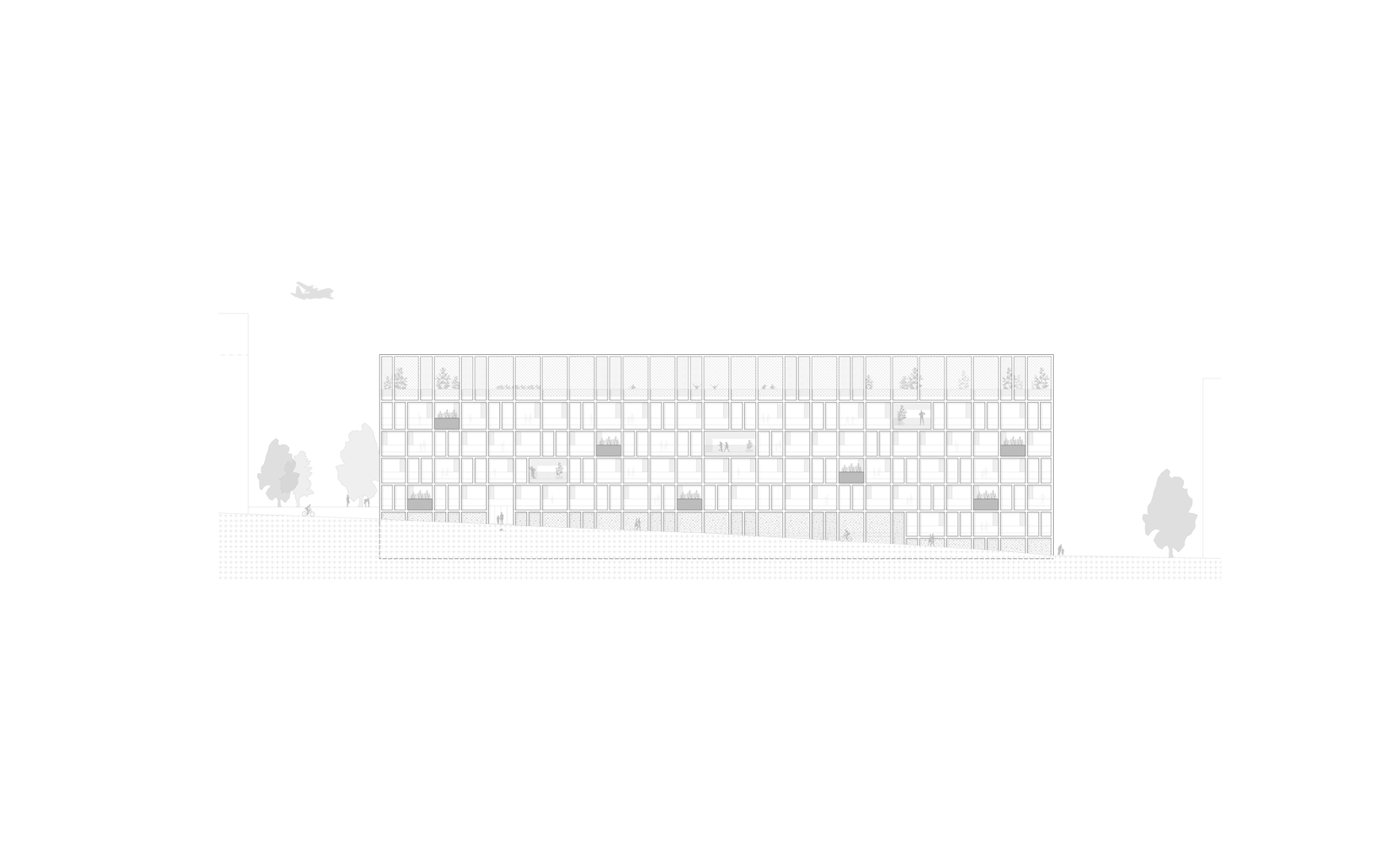
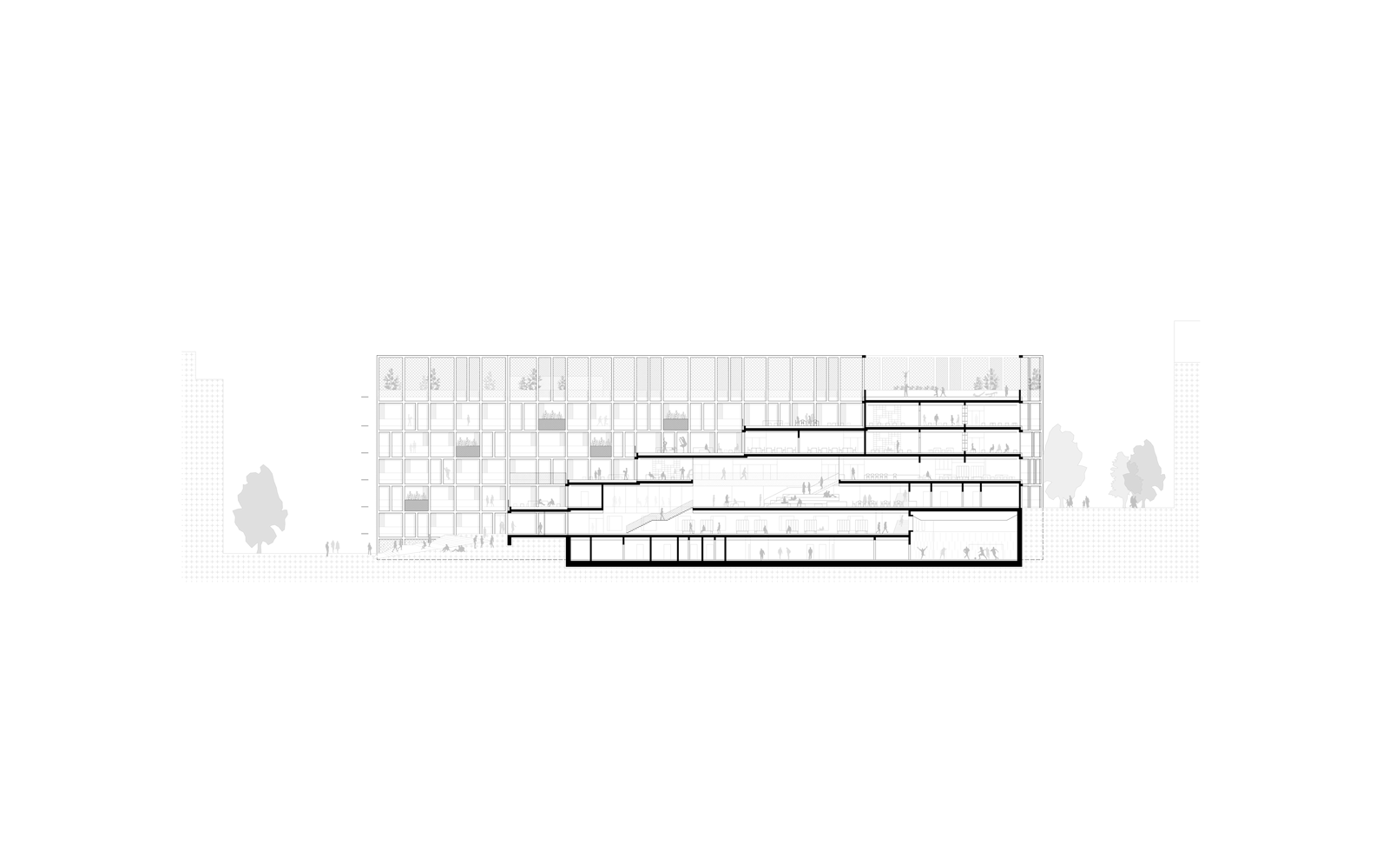
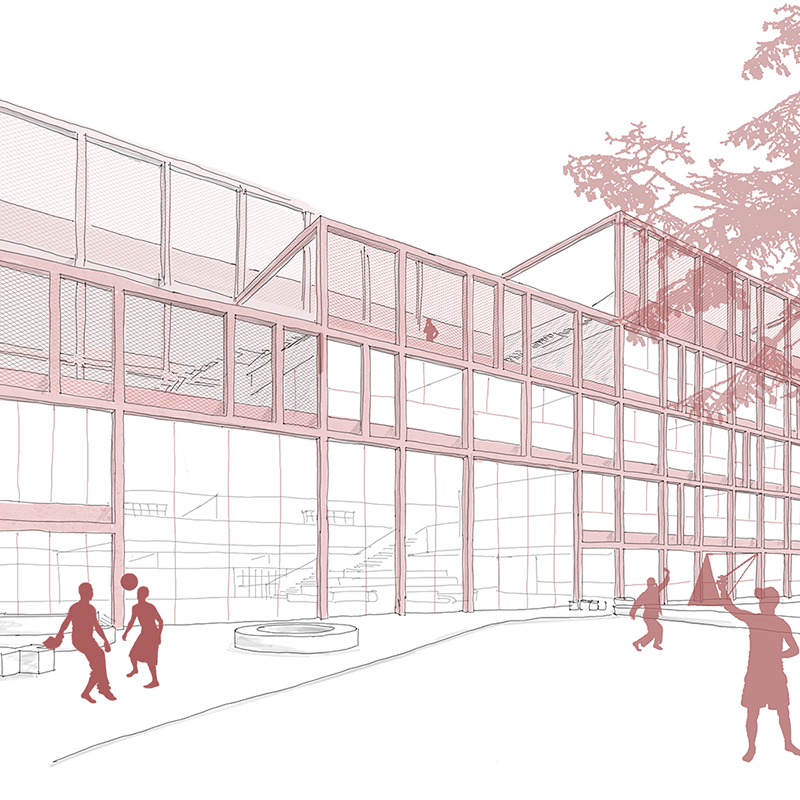
Situated at the eastern edge of the Eurogate II urban development area, the new secondary school Otto-Preminger-Straße is conceived as a quiet, identity-defining building. Confident and self-assured, yet equally restrained and unassuming, the new structure integrates naturally into its surroundings. The volume of the school building is placed with precise spatial intention. Along Landstraßer Hauptstraße, the building edge is closed and continuous. On the courtyard side, the angled façade creates a considered urban and formal transition between the "centre" and the "edge." The forecourt along Otto-Preminger-Straße is conceived as a generous stepped terrace landscape – transforming the level change between street and entrance floor into a lively, urban setting that invites people to linger.
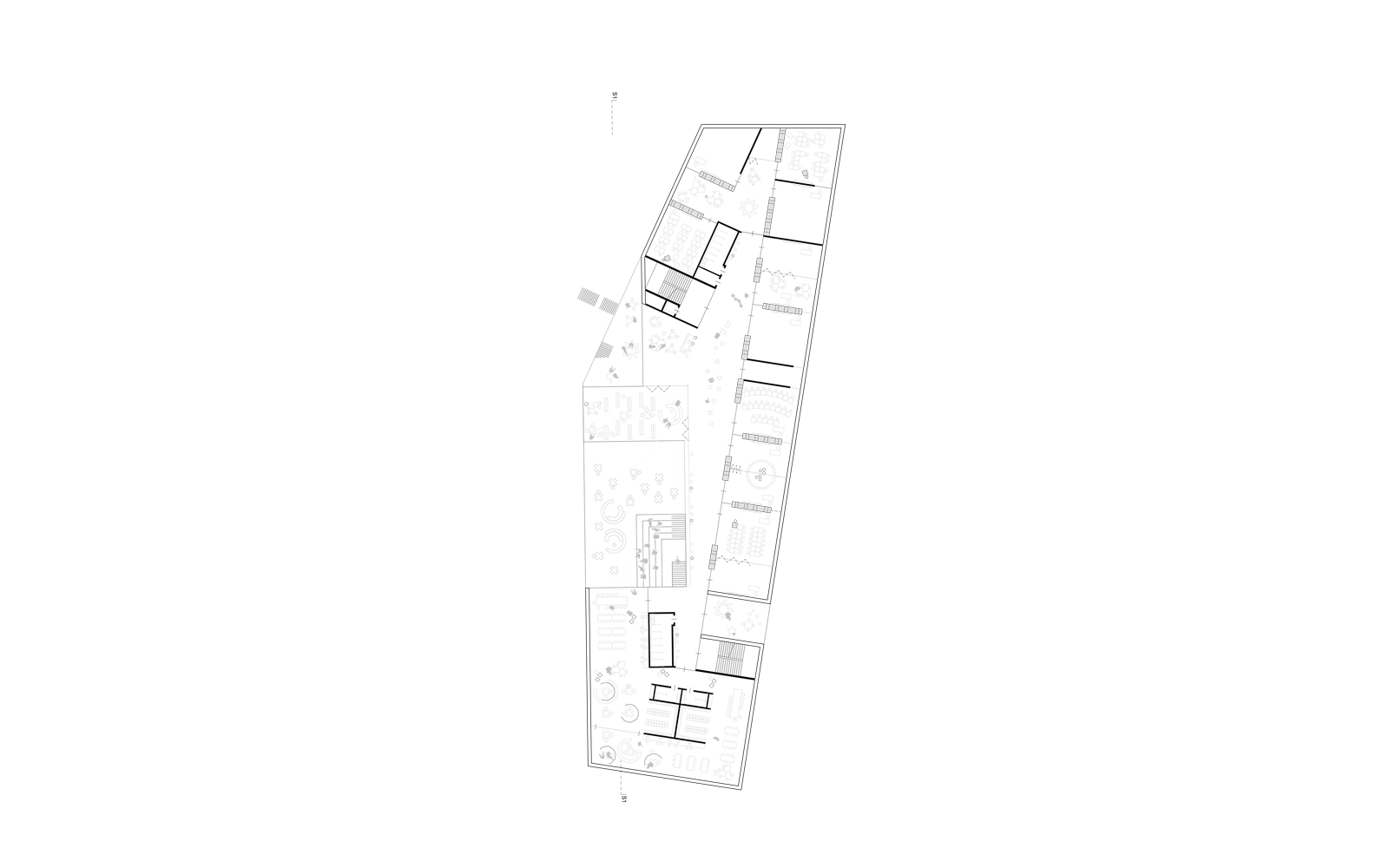
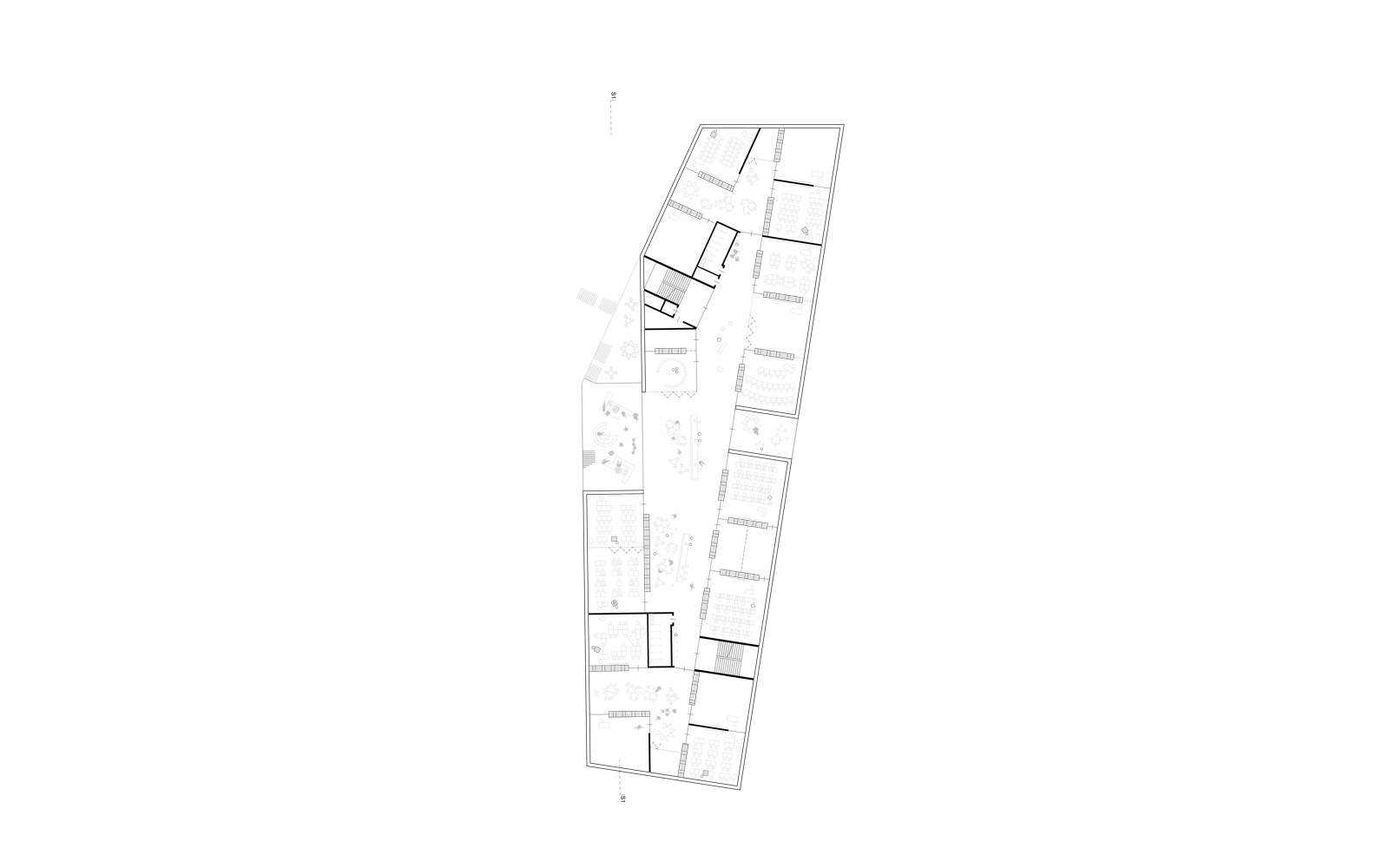
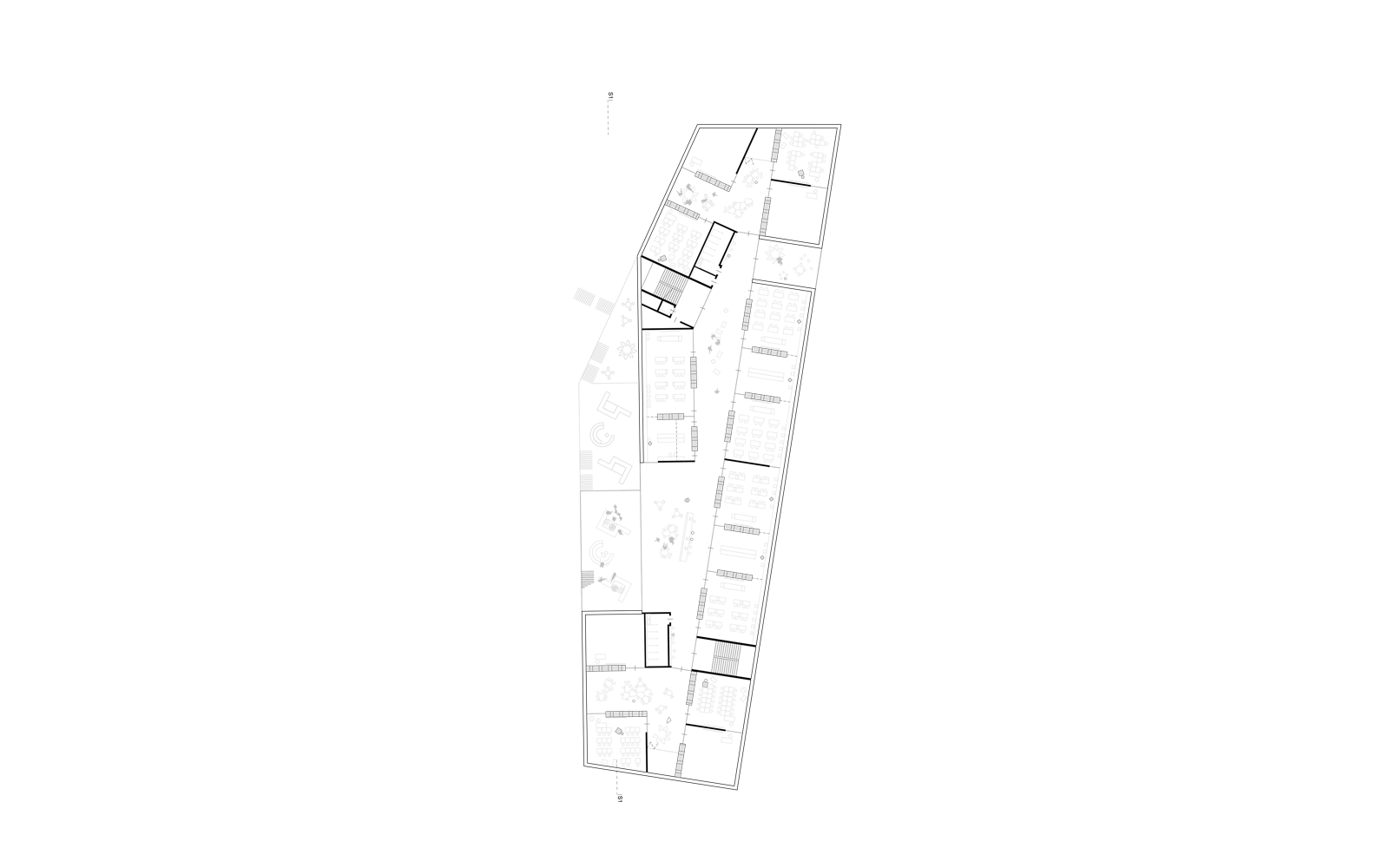
The new school takes the form of a generous, open structure, largely neutral in its programming and adaptable in its use. It is understood holistically as a space for living and learning – one in which, despite a compact configuration, rooms rich in volume and atmosphere, compelling visual connections, and differentiated places for learning, communication, and leisure are created in diverse and surprising ways. The overall concept is underpinned by a clear structural framework with a regular constructive rhythm, ensuring a high degree of adaptability for future development. Reading the floor plans, one discovers spatially interconnected structures across floors – open and enclosed zones, balconies and terraces – offering a wide range of possible uses. Despite its compact form, the school presents itself as a generous, light-filled structure. The primary structural material of concrete is left exposed and, in combination with crafted timber elements, lends the building a distinctive atmosphere of its own.
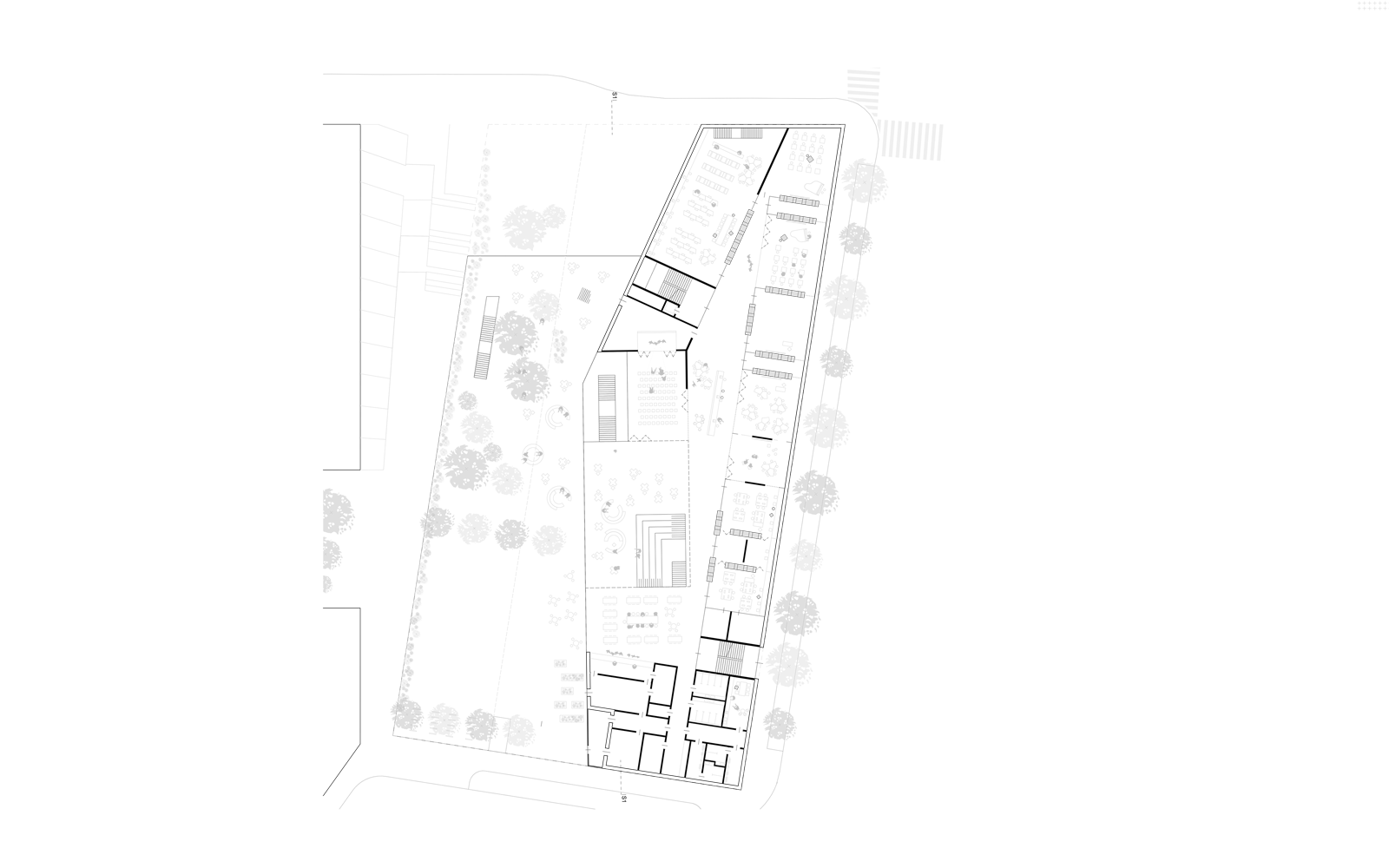
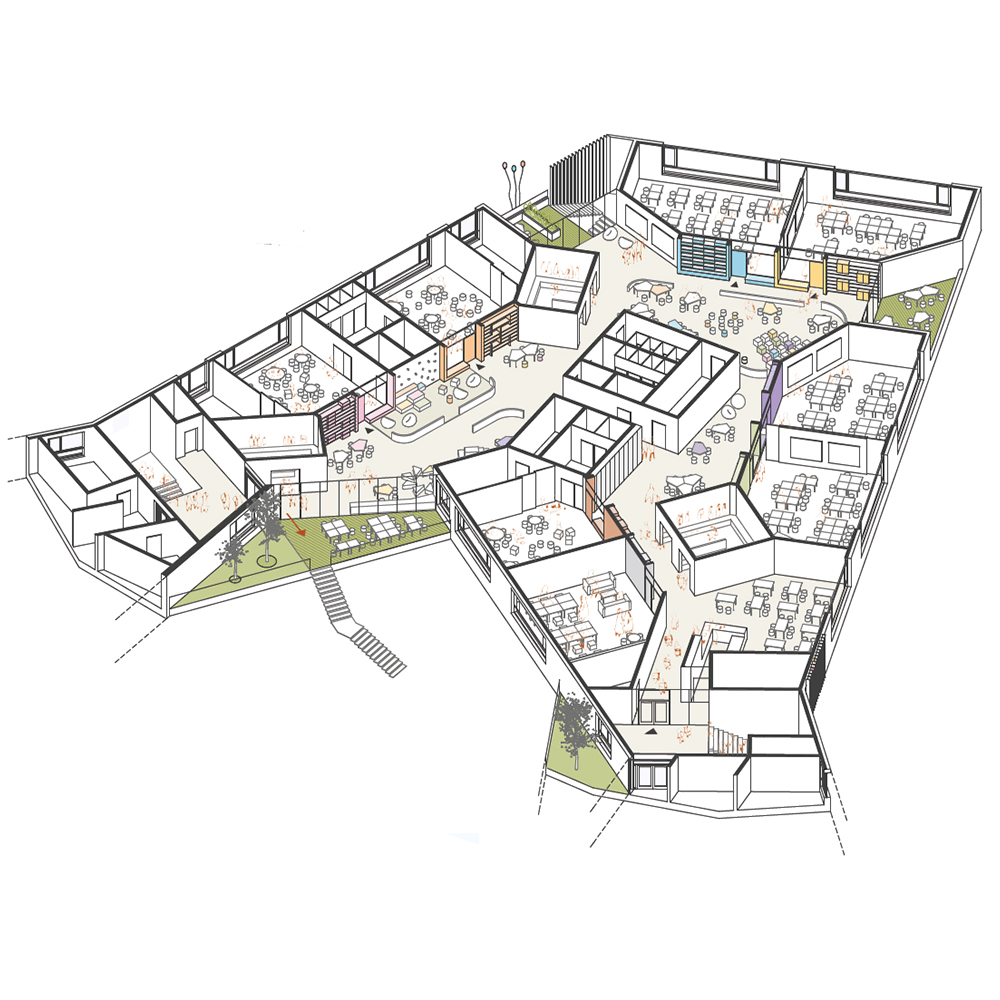
In defining the distribution of uses within the building, two levels of connectivity were considered. The first encompasses the "semi-public" functions – spaces and places used by all students – located on the ground and first upper floors. Clearly separated for the purposes of orientation, they are reconnected through the vertical continuity of the section. The second level of connectivity introduces the clusters as "semi-private" realms: spaces and areas assigned to particular groups of students, proposed as compact, serial spatial units. The clusters foster a sense of identity and belonging, offering space for retreat and focused project work — a second home within the school. The open learning zones form the heart of each cluster; through carefully positioned window openings and transparent building elements, varied visual connections are unlocked and natural light penetrates deep into the open learning areas. Despite the clear organizational logic of the clusters, open spatial structures and flowing spaces create zones of connection throughout.
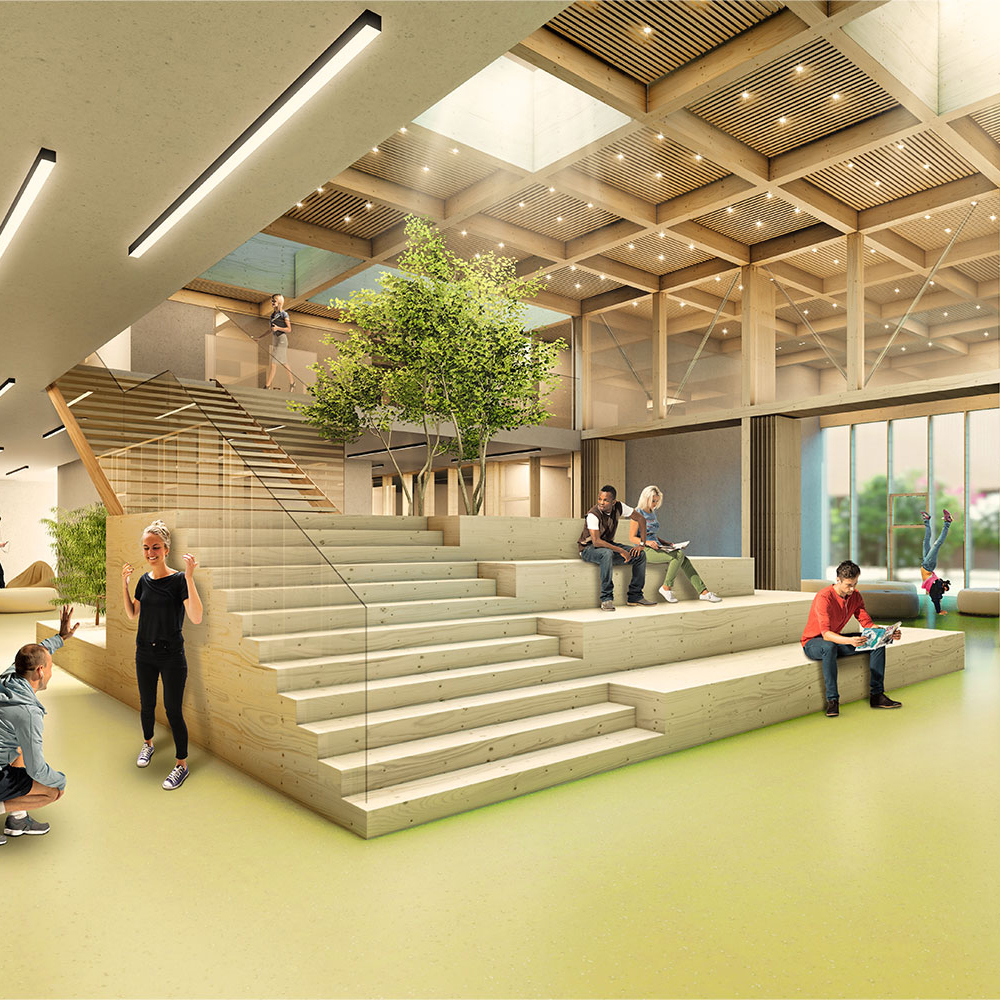
Upon entering the building from the forecourt, one is welcomed by a generously designed central cloakroom with direct access to the main staircases. On the first upper floor – at garden level – the aula, multipurpose hall, and canteen are conceived as an interconnected spatial ensemble with direct access to the outdoor areas. At its heart, a stepped seating landscape invites lingering and connects the first and second upper floors, where the library is located. Folding and sliding partitions allow for varied spatial configurations: the library and after-school care, the aula and multipurpose hall, can each function independently or be opened together into a single generous, flowing space.
The new school takes the form of a generous, open structure, largely neutral in its programming and adaptable in its use. It is understood holistically as a space for living and learning – one in which, despite a compact configuration, rooms rich in volume and atmosphere, compelling visual connections, and differentiated places for learning, communication, and leisure are created in diverse and surprising ways. The overall concept is underpinned by a clear structural framework with a regular constructive rhythm, ensuring a high degree of adaptability for future development. Reading the floor plans, one discovers spatially interconnected structures across floors – open and enclosed zones, balconies and terraces – offering a wide range of possible uses. Despite its compact form, the school presents itself as a generous, light-filled structure. The primary structural material of concrete is left exposed and, in combination with crafted timber elements, lends the building a distinctive atmosphere of its own.
In defining the distribution of uses within the building, two levels of connectivity were considered. The first encompasses the "semi-public" functions – spaces and places used by all students – located on the ground and first upper floors. Clearly separated for the purposes of orientation, they are reconnected through the vertical continuity of the section. The second level of connectivity introduces the clusters as "semi-private" realms: spaces and areas assigned to particular groups of students, proposed as compact, serial spatial units. The clusters foster a sense of identity and belonging, offering space for retreat and focused project work — a second home within the school. The open learning zones form the heart of each cluster; through carefully positioned window openings and transparent building elements, varied visual connections are unlocked and natural light penetrates deep into the open learning areas. Despite the clear organizational logic of the clusters, open spatial structures and flowing spaces create zones of connection throughout.
Upon entering the building from the forecourt, one is welcomed by a generously designed central cloakroom with direct access to the main staircases. On the first upper floor – at garden level – the aula, multipurpose hall, and canteen are conceived as an interconnected spatial ensemble with direct access to the outdoor areas. At its heart, a stepped seating landscape invites lingering and connects the first and second upper floors, where the library is located. Folding and sliding partitions allow for varied spatial configurations: the library and after-school care, the aula and multipurpose hall, can each function independently or be opened together into a single generous, flowing space.
2nd prize
Campus Seestadt Aspern III
Recognition
Campus
Hausfeld Nord
Hausfeld Nord
3rd Prize
Ottakring
Clinic
Clinic
Recognition
Campus
Nordwestbahnhof
Nordwestbahnhof
2nd Prize
Hietzing Hospital
Recognition
Secondary School
Otto-Preminger-Straße
Otto-Preminger-Straße
Competition
Alps-Adriatic-Secondary School
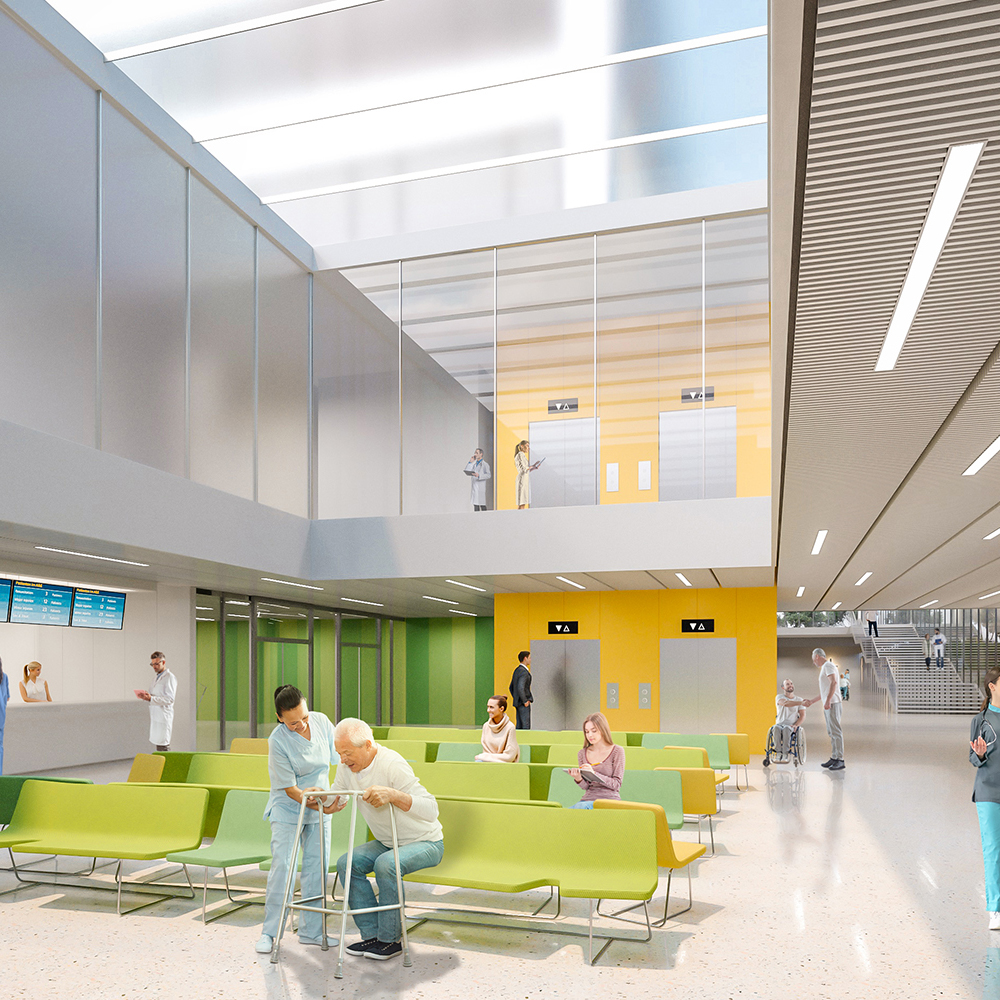
Competition
Oberpullendorf Hospital
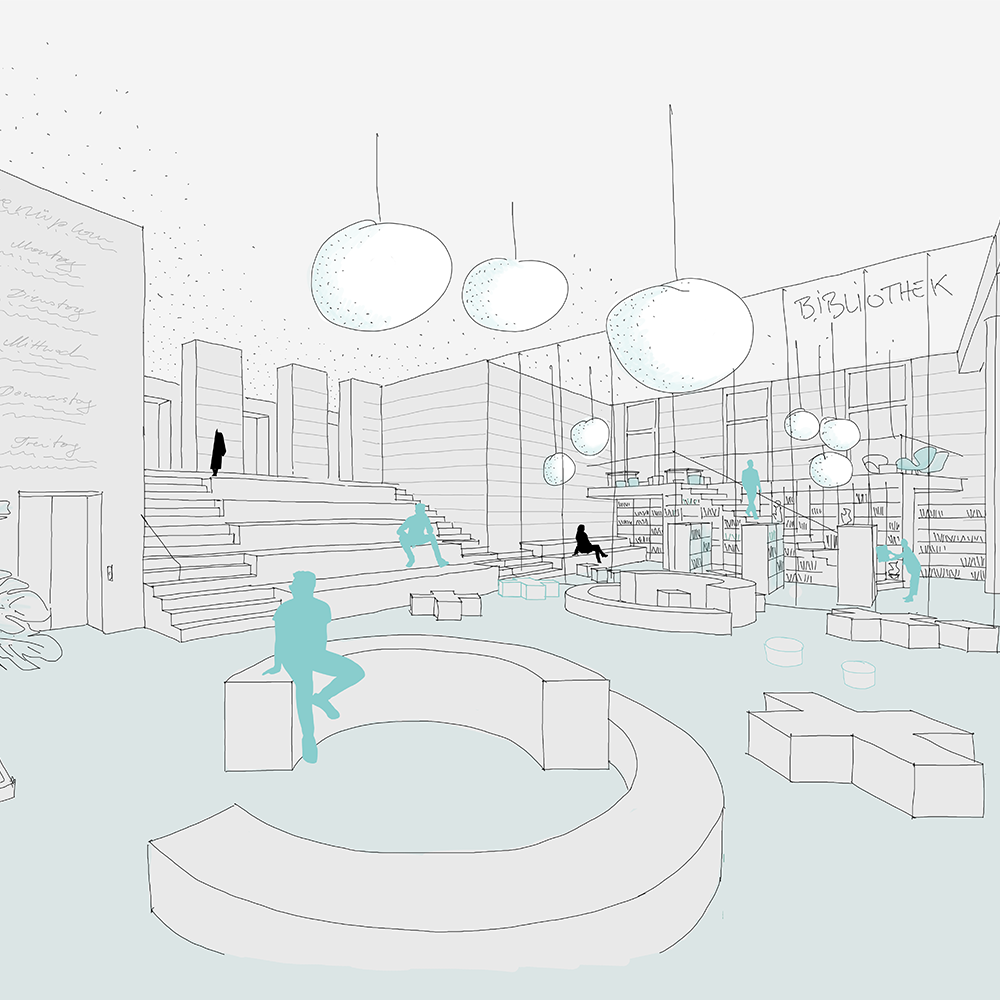
2nd Prize
Semmelweis grounds Building 1
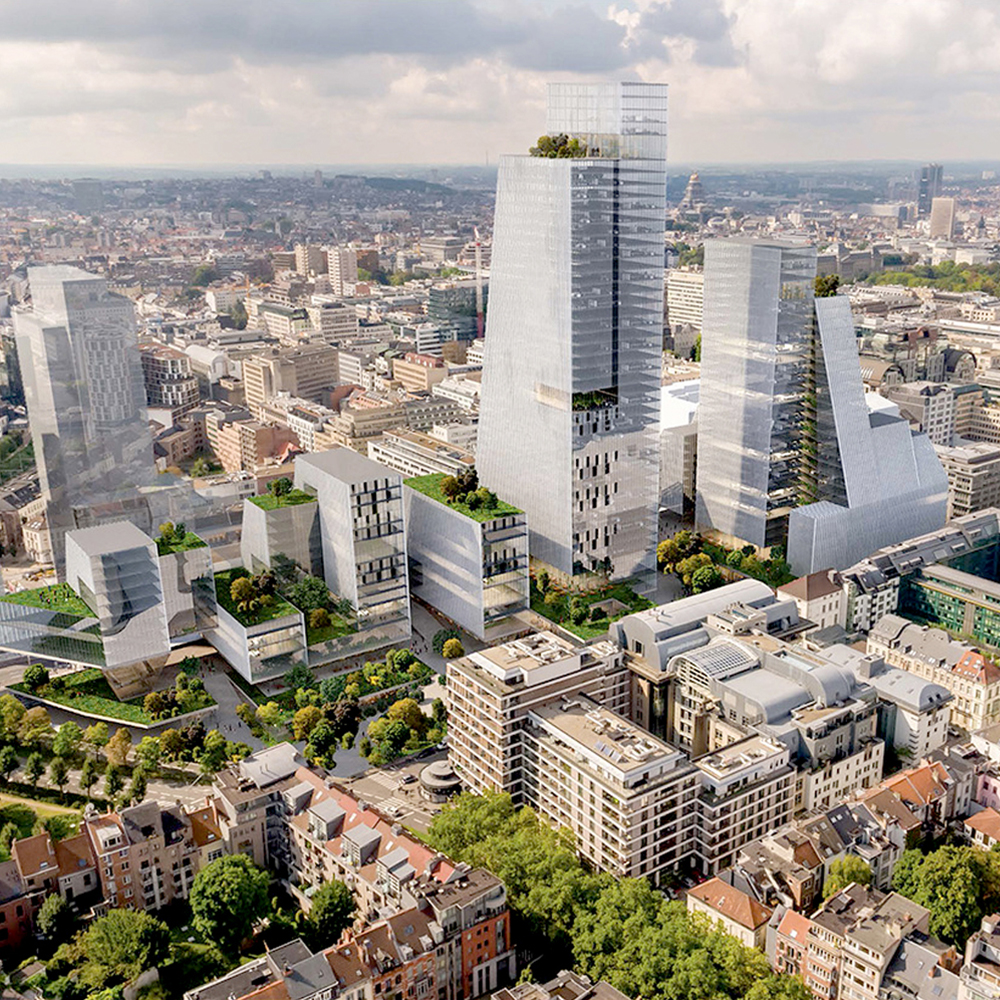
Competition
Loi 130
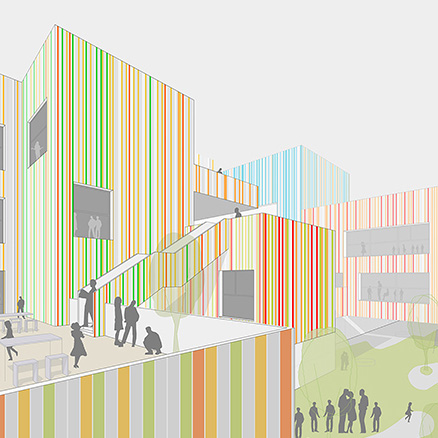
Recognition
Campus
Deutschordenstraße
Deutschordenstraße
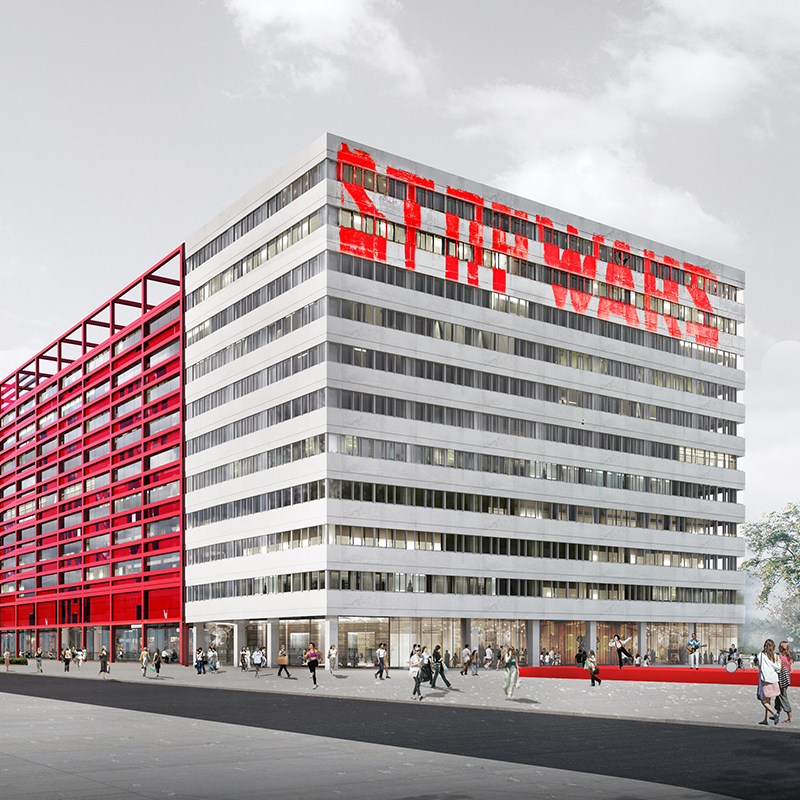
Competition
House of Statistics
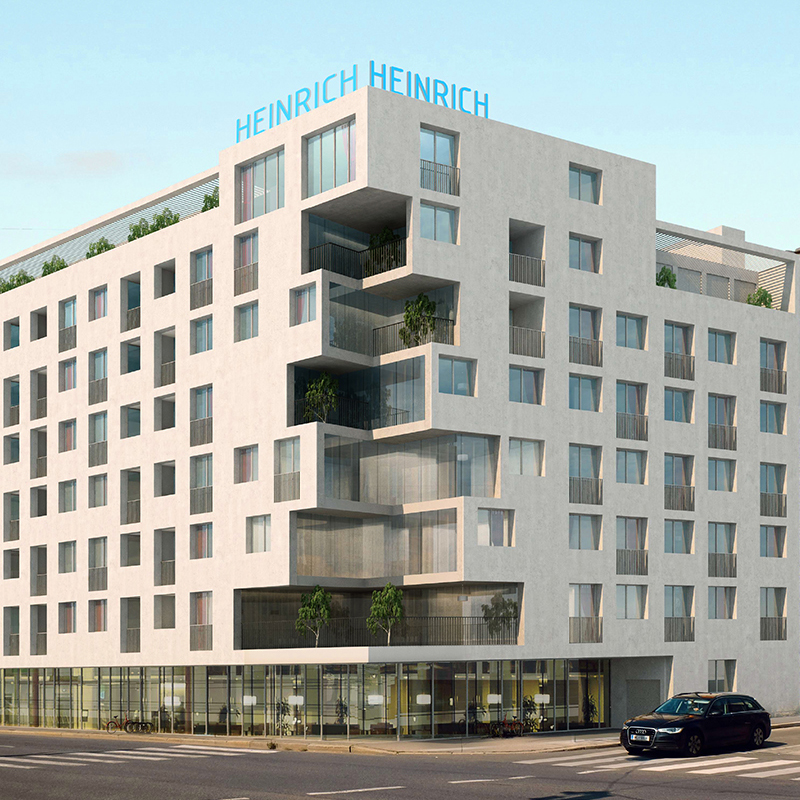
Competition
Heinrich – Serviced Apartments
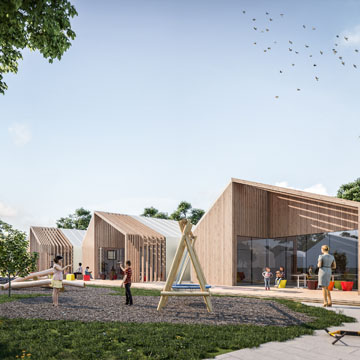
3rd Prize
Lower Austria State Kindergarten Pulkau
3rd prize
Aron Menczer Campus
2nd prize
House of History Austria
Recognition
New building for the University of Natural Resources and Applied Life Sciences, Vienna
Competition
Neighbourhood development Leutbühel
Competition
Students hostel Pitzelstätten
Competition
Parish church of Essling
Competition
Rathausstraße 1
Multifunctional Centre Elsterwerdaer Platz