


Hietzing Hospital
2023
2023
Wolkersbergenstraße 1, 1130 Vienna
Competition 2nd Prize, 2023
with F+P Architekten & MINTplus ZT GmbH
Awarded by: City of Vienna – Vienna Healthcare Group
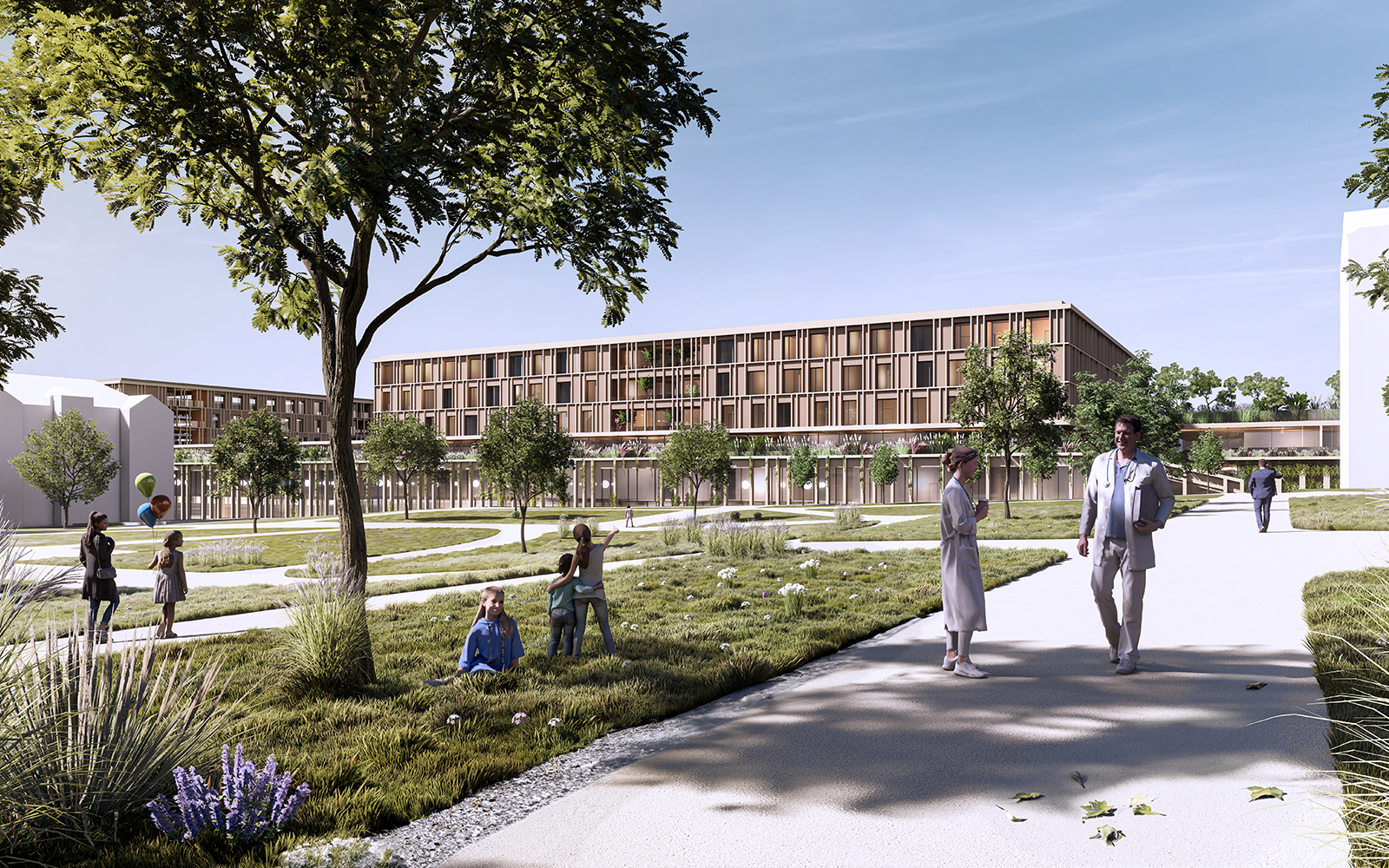
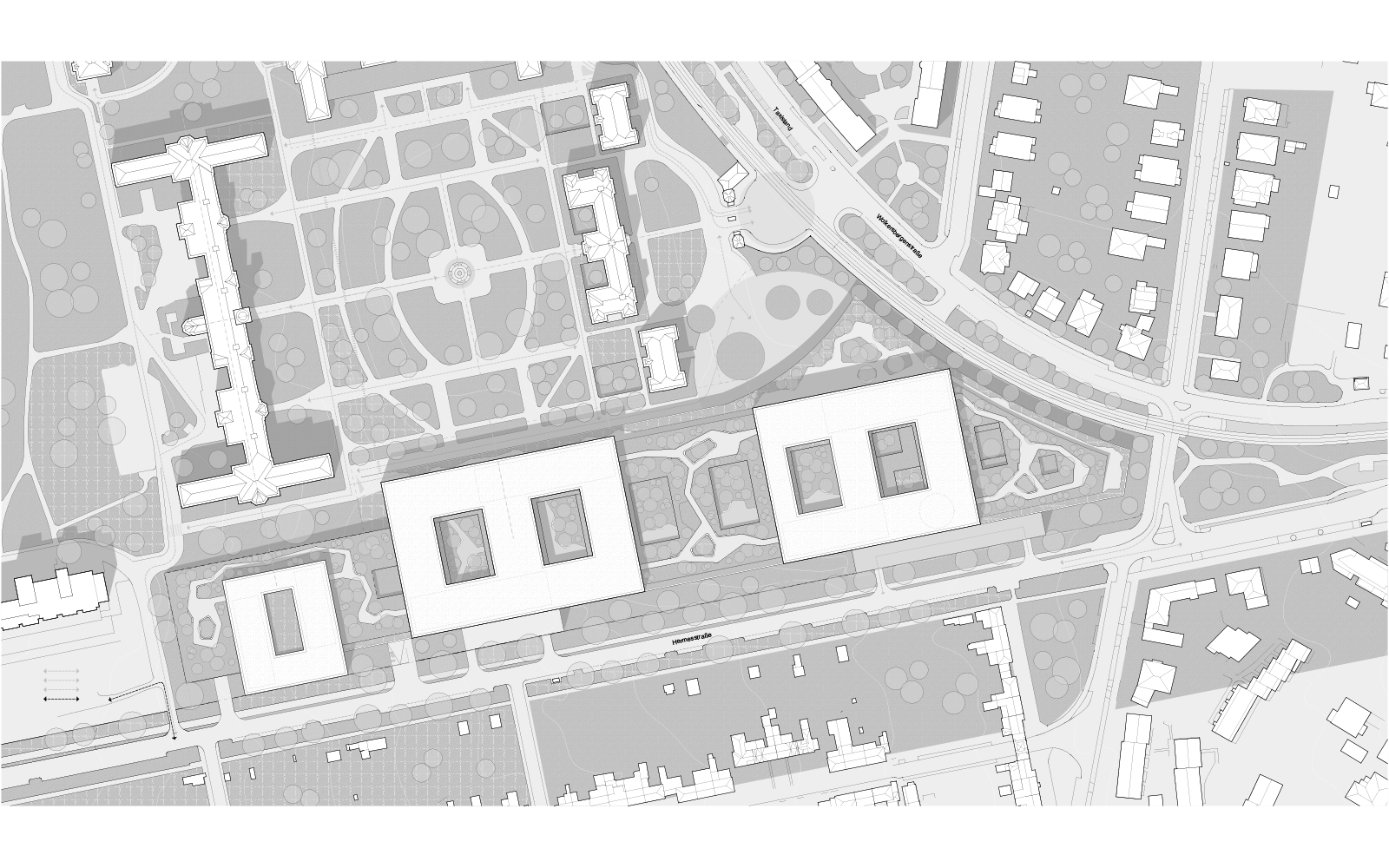
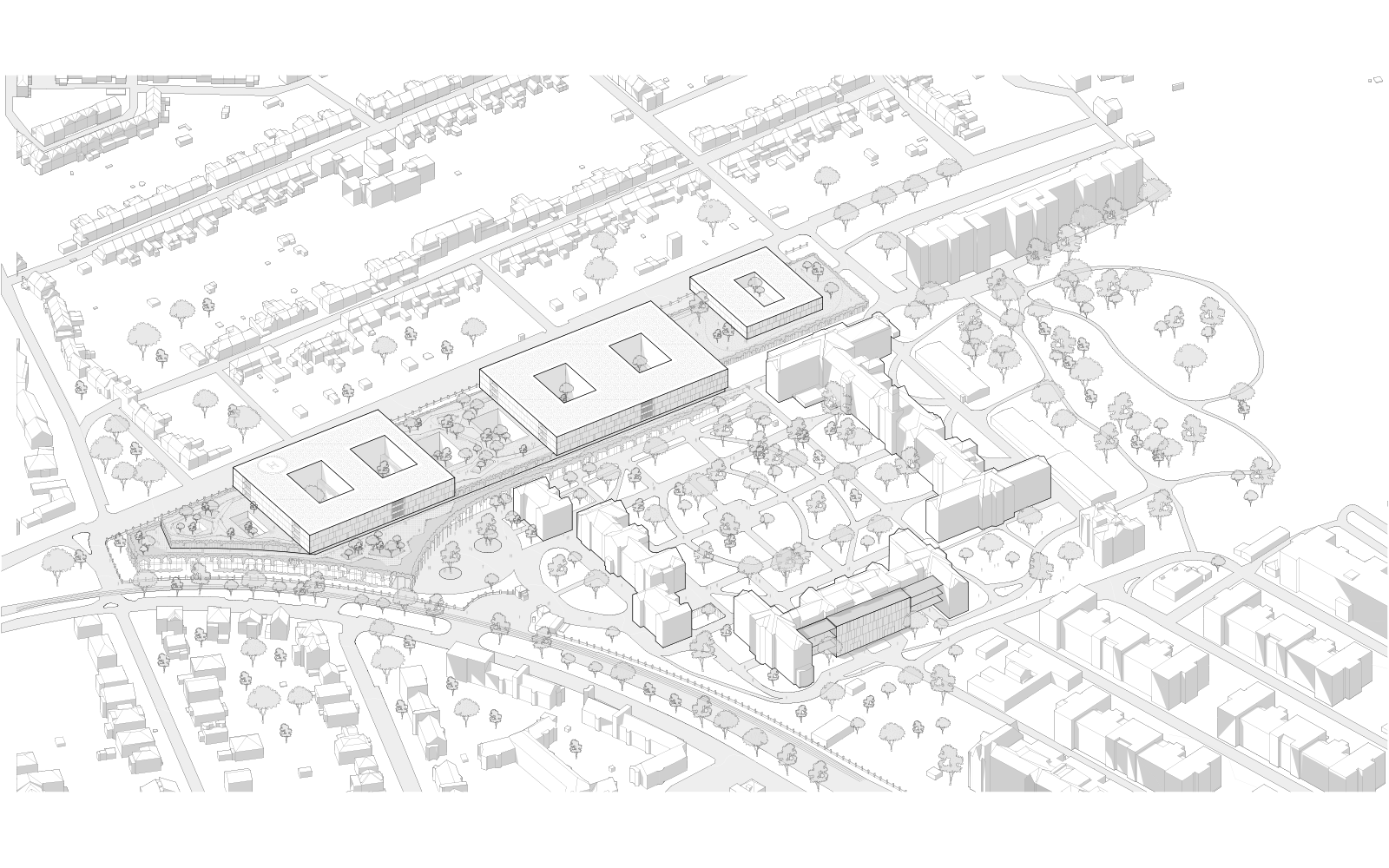
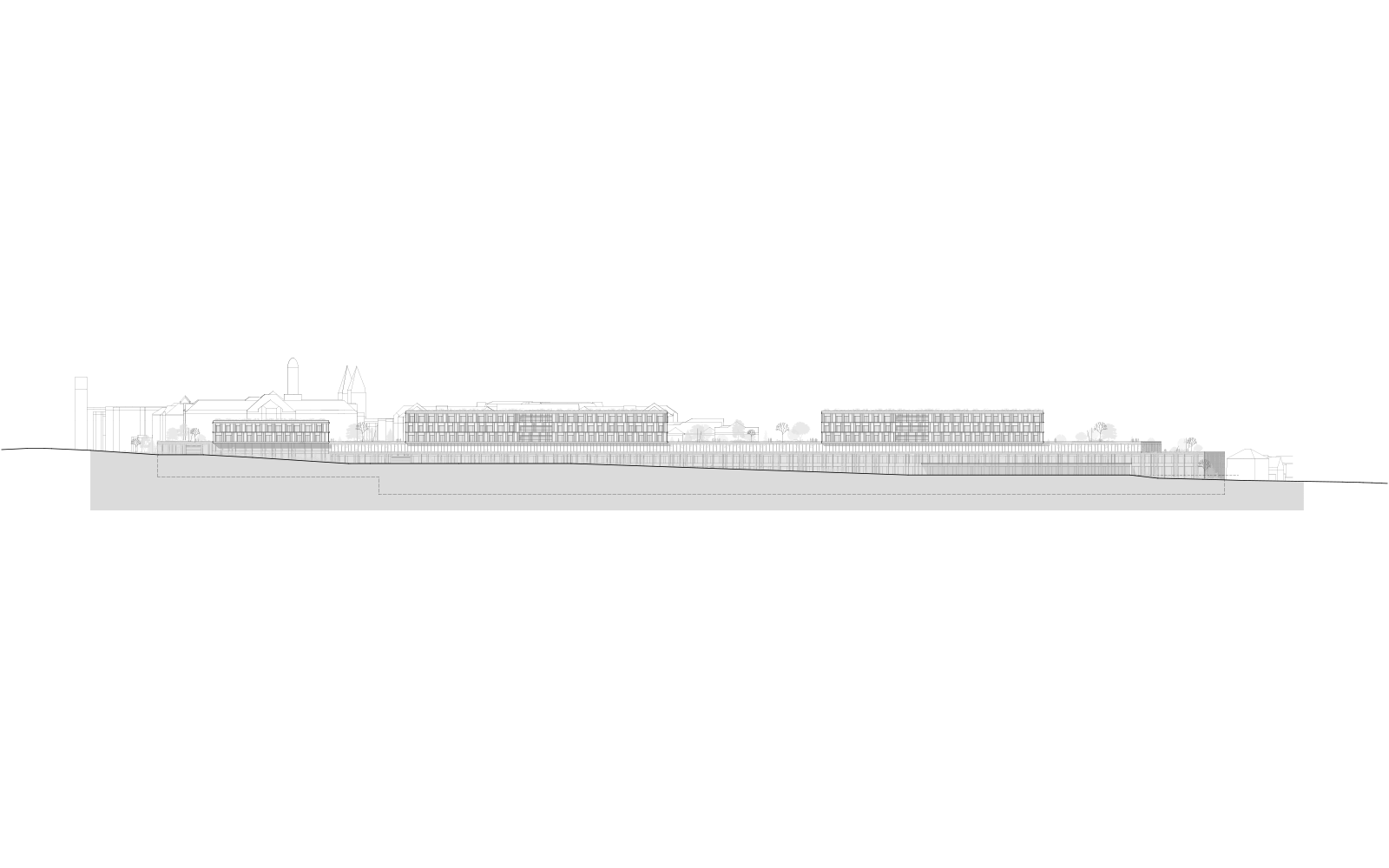
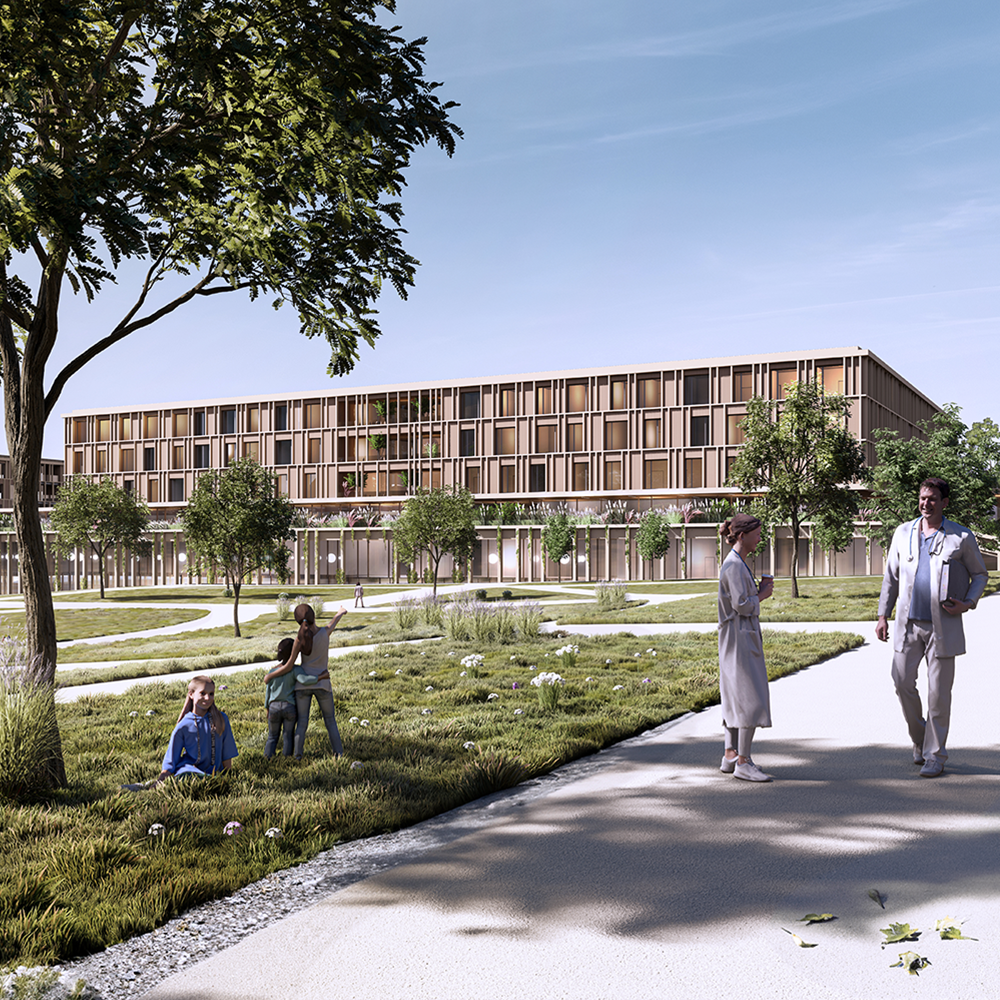
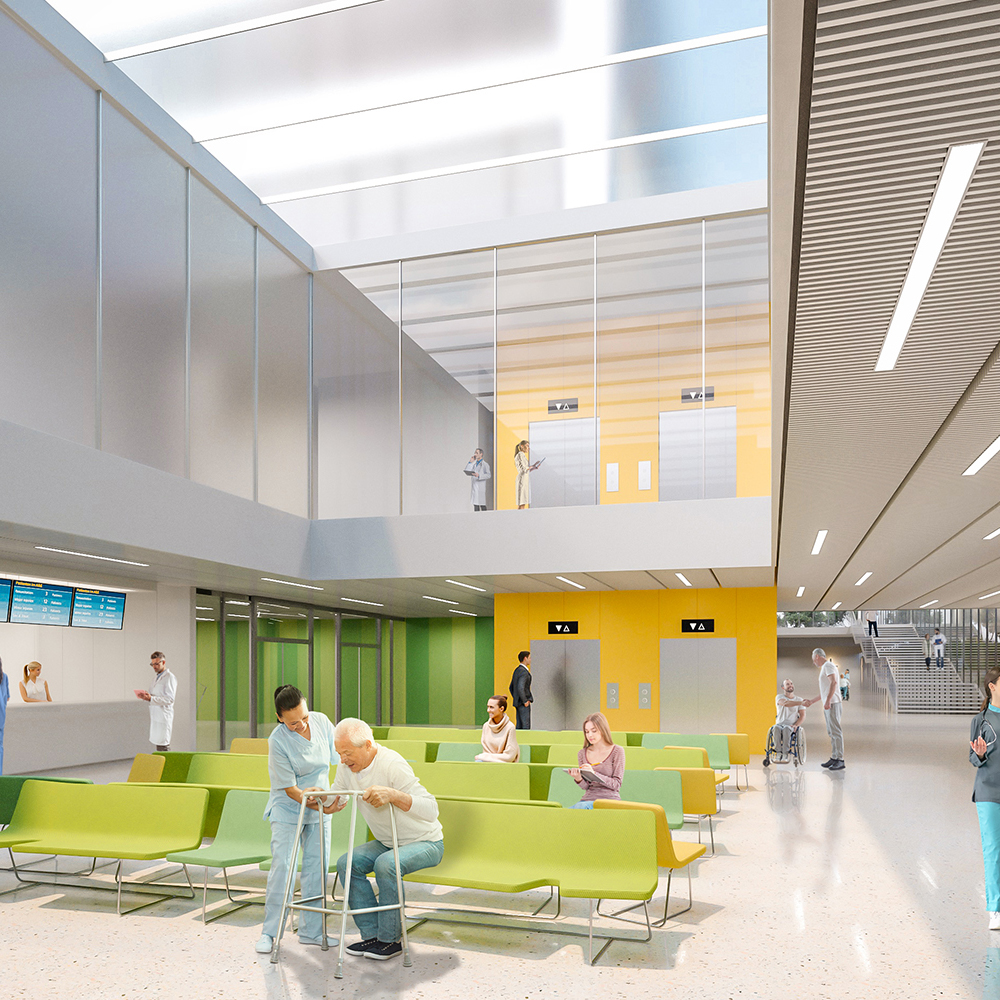
The urban planning concept for the new central building of Hietzing Hospital proposes an elongated, orthogonal structure along Hermesstraße, with the historic perimeter wall deliberately exposed through a ten-metre setback. The building is composed of three pavilions resting on a shared plinth, carefully responding to the surrounding context and functional requirements. Vertical accents within the building plots complement the historic ensemble and integrate sensitively into the existing urban structure.
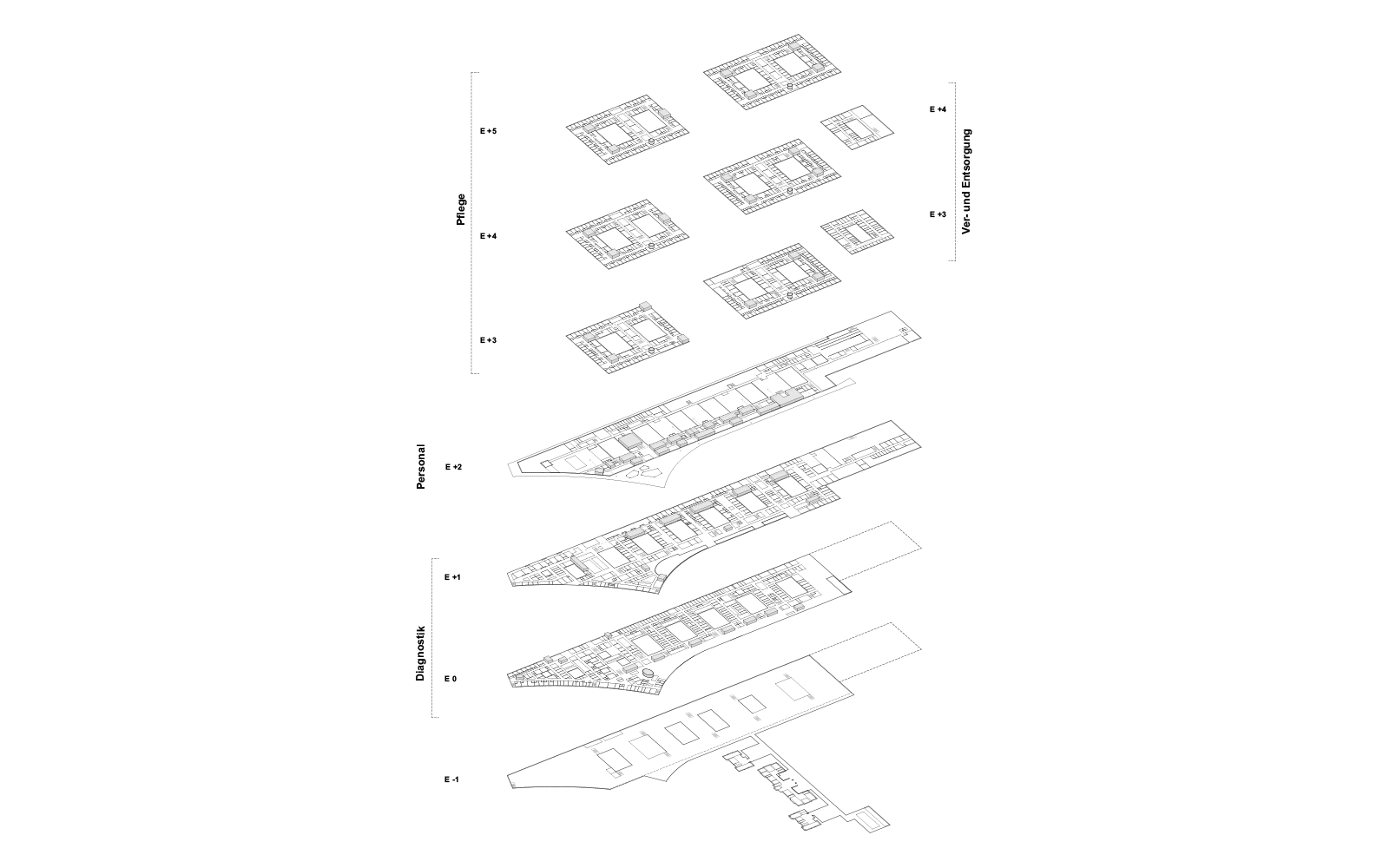
The plinth serves as a robust foundation, with the building height reducing towards the east to establish a harmonious relationship with its surroundings. The hospital is accessed via a striking main entrance that engages in considered dialogue with the historic architecture. The building concept is organized around a clear separation of public areas, diagnostic facilities, and patient care – with the interstitial "joint" zone forming the operational heart of the hospital, primarily reserved for staff.
The outdoor spaces of the hospital play a central role in patient wellbeing. A car-free, green environment is conceived as a healing garden, actively supporting recovery and regeneration. Historic axes are woven into the design of the approach routes, while the forecourt and inner courtyards create a welcoming and restorative atmosphere. The staff terrace and patient-oriented healing gardens on the upper floors offer spaces for both rest and activity, inviting relaxation and social interaction through generous planting and comfortable seating.
The design also embraces biodiversity through greened rooftops and façades that improve the microclimate and create habitats for plants and wildlife. Taken as a whole, the concept fosters a harmonious, functional, and health-promoting environment for patients, visitors, and clinical staff alike.
The plinth serves as a robust foundation, with the building height reducing towards the east to establish a harmonious relationship with its surroundings. The hospital is accessed via a striking main entrance that engages in considered dialogue with the historic architecture. The building concept is organized around a clear separation of public areas, diagnostic facilities, and patient care – with the interstitial "joint" zone forming the operational heart of the hospital, primarily reserved for staff.
The outdoor spaces of the hospital play a central role in patient wellbeing. A car-free, green environment is conceived as a healing garden, actively supporting recovery and regeneration. Historic axes are woven into the design of the approach routes, while the forecourt and inner courtyards create a welcoming and restorative atmosphere. The staff terrace and patient-oriented healing gardens on the upper floors offer spaces for both rest and activity, inviting relaxation and social interaction through generous planting and comfortable seating.
The design also embraces biodiversity through greened rooftops and façades that improve the microclimate and create habitats for plants and wildlife. Taken as a whole, the concept fosters a harmonious, functional, and health-promoting environment for patients, visitors, and clinical staff alike.
2nd prize
Campus Seestadt Aspern III
Recognition
Campus
Hausfeld Nord
Hausfeld Nord
3rd Prize
Ottakring
Clinic
Clinic
Recognition
Campus
Nordwestbahnhof
Nordwestbahnhof
2nd Prize
Hietzing Hospital
Recognition
Secondary School
Otto-Preminger-Straße
Otto-Preminger-Straße
Competition
Alps-Adriatic-Secondary School
Competition
Oberpullendorf Hospital
2nd Prize
Semmelweis grounds Building 1
Competition
Loi 130
Recognition
Campus
Deutschordenstraße
Deutschordenstraße
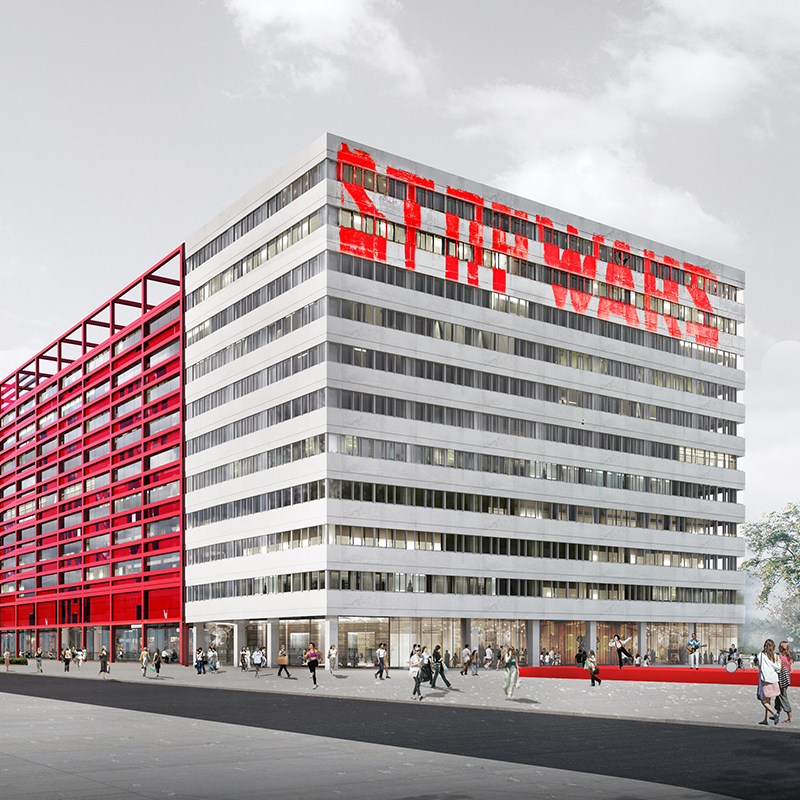
Competition
House of Statistics
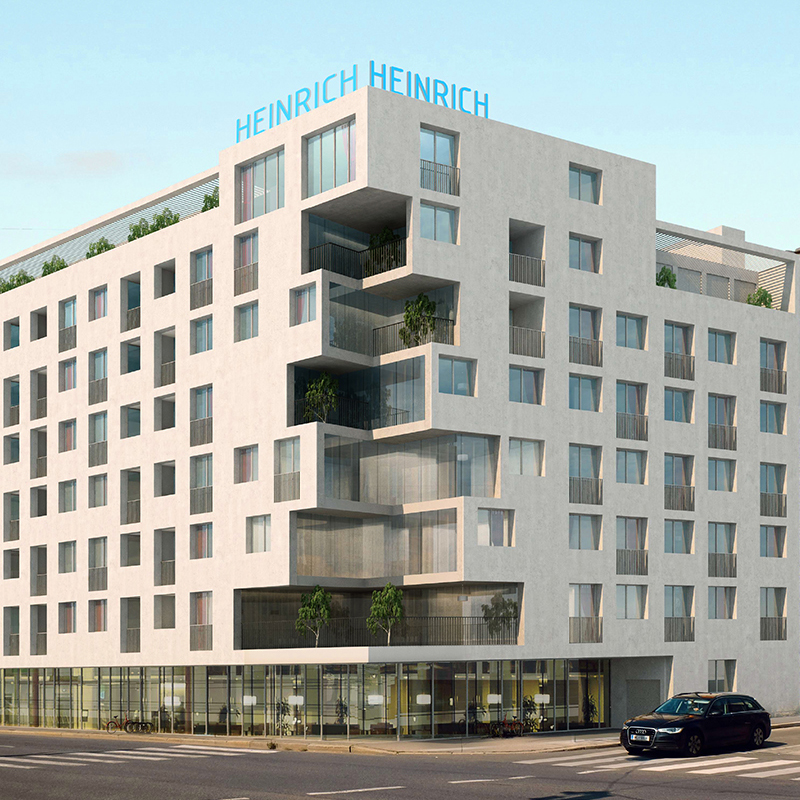
Competition
Heinrich – Serviced Apartments
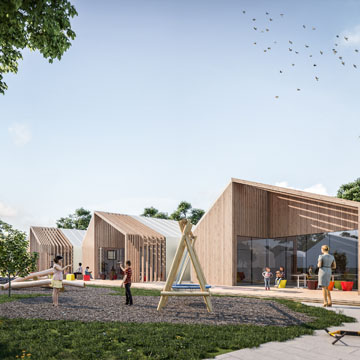
3rd Prize
Lower Austria State Kindergarten Pulkau
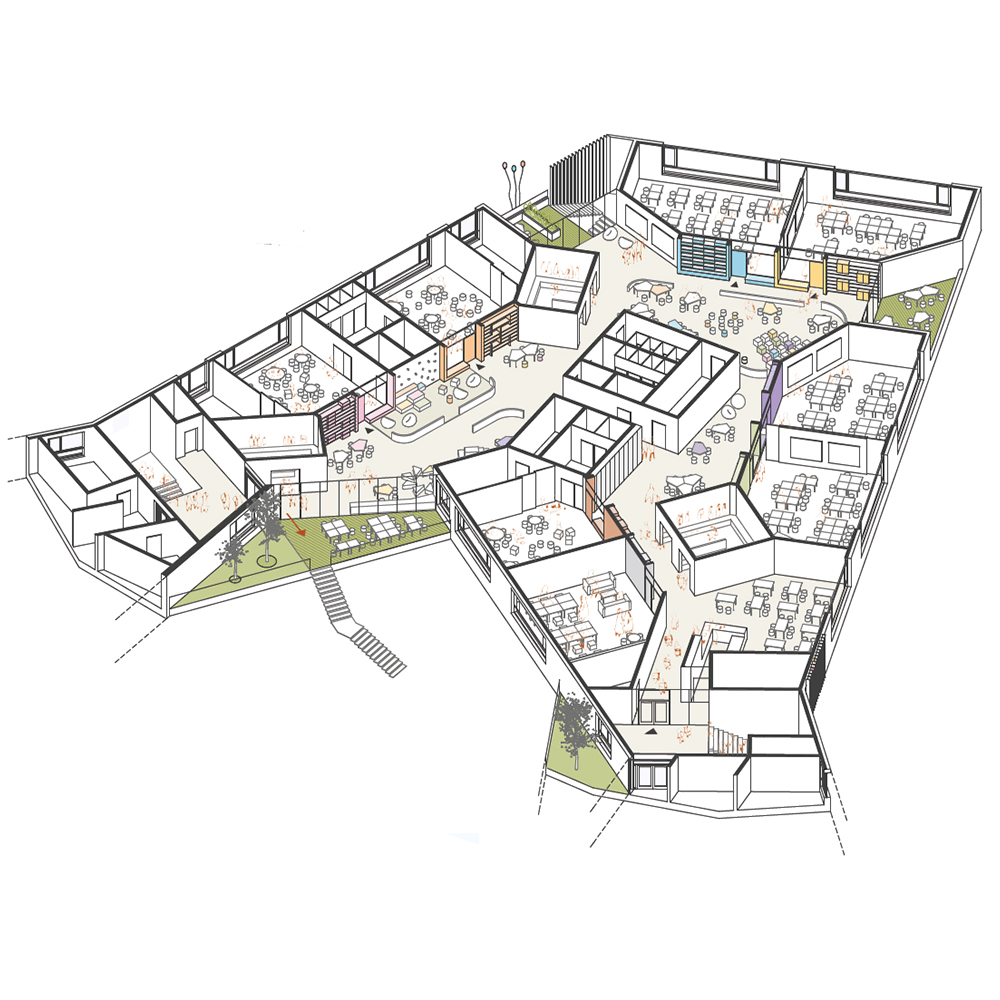
3rd prize
Aron Menczer Campus
2nd prize
House of History Austria
Recognition
New building for the University of Natural Resources and Applied Life Sciences, Vienna
Competition
Neighbourhood development Leutbühel
Competition
Students hostel Pitzelstätten
Competition
Parish church of Essling
Competition
Rathausstraße 1
Multifunctional Centre Elsterwerdaer Platz