


Primary School and Middle School Florian-Hedorfer-Straße
2028
2028
Florian-Hedorfer-Straße 20-26,
1110 Vienna
Competition 1st prize, 2024
Client:
City of Vienna, MA56, Vienna Schools Department
Area: 6.428 m² usable floor space / 9.452 m² gross floor area
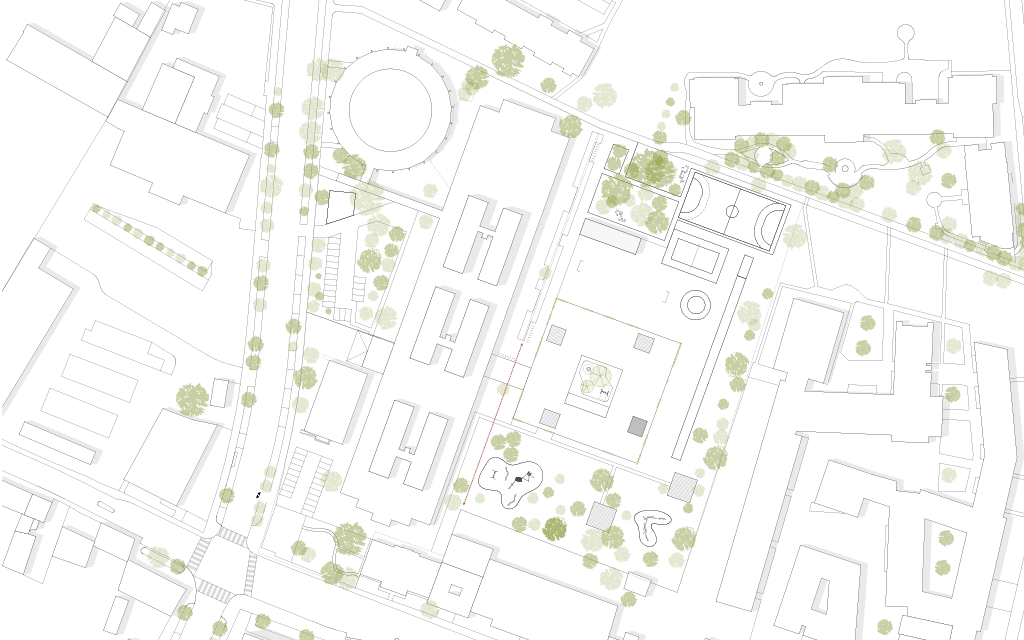
Space allocation plan: Extension of the school location Florian-Hedorfer-Straße 20-26
Landscape Architecture:
Carla Lo Freiraum
Structural design: KPZT GmbH
building physics: hacon GmbH
building services: sima consulting GmbH
Furnishing & Design: MINTplus ZT GmbH
Costs & Call for tender: BUBELEICHHORN ZT GmbH
Download brochure (pdf)
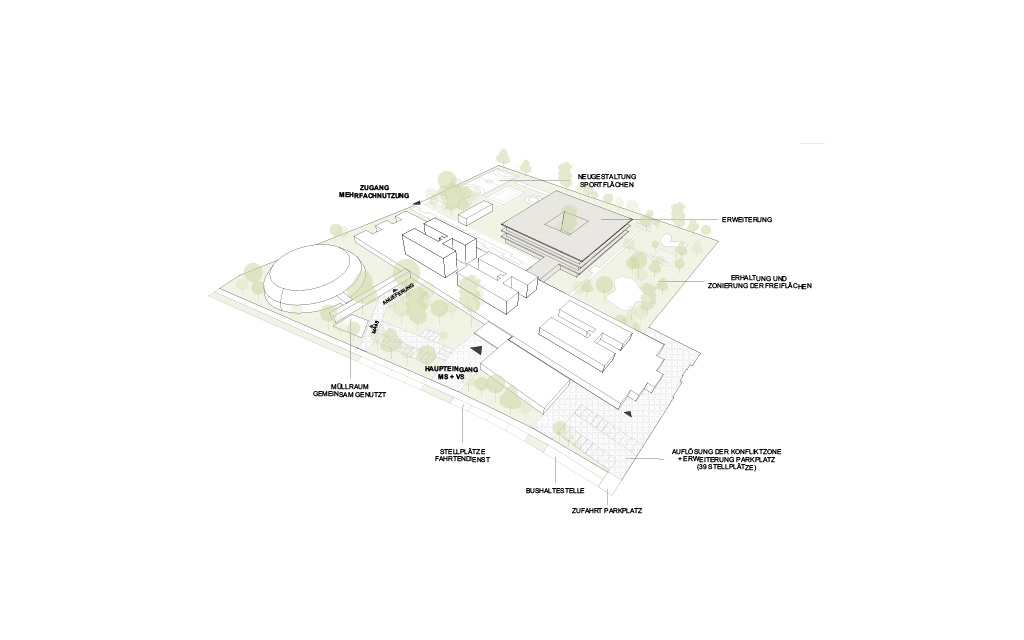
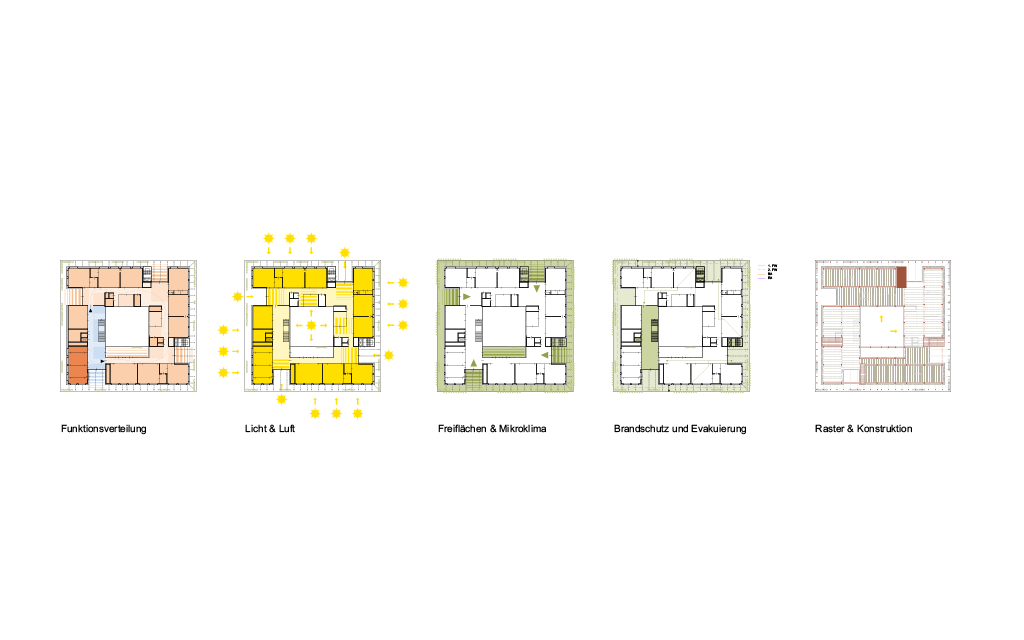
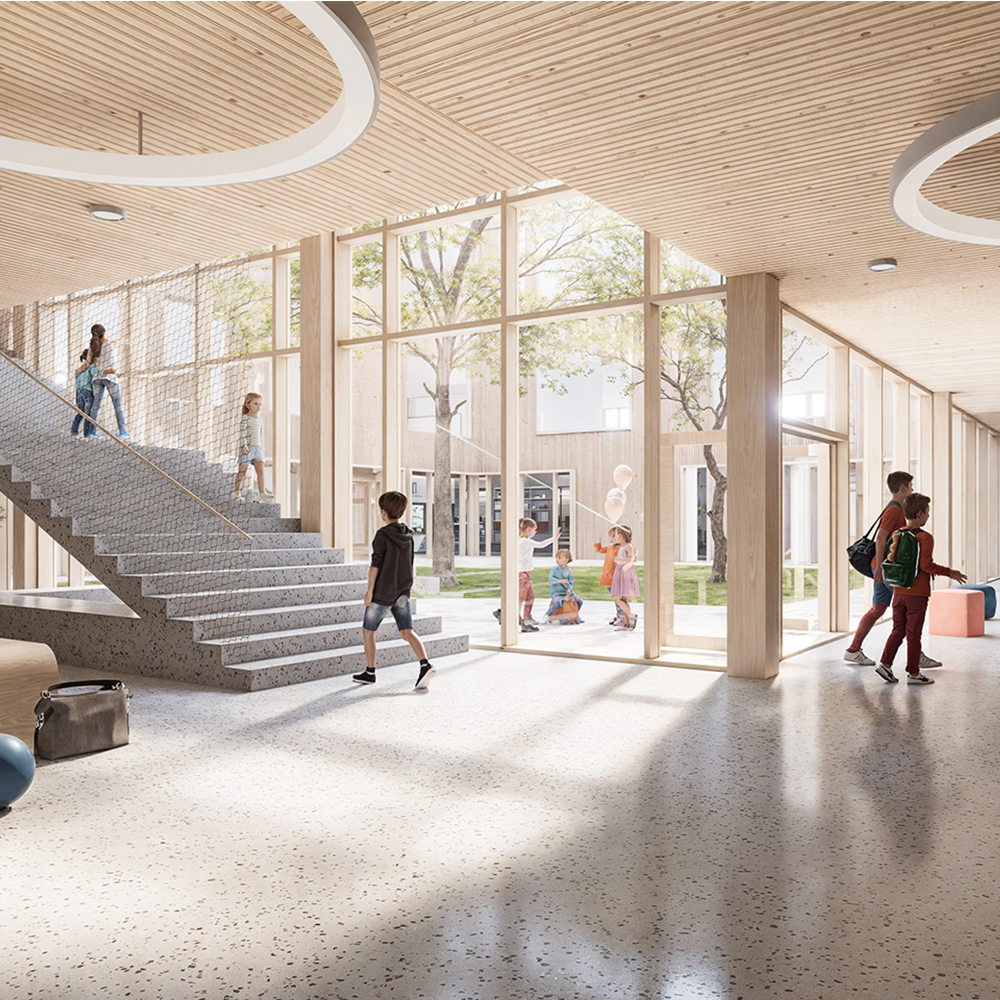
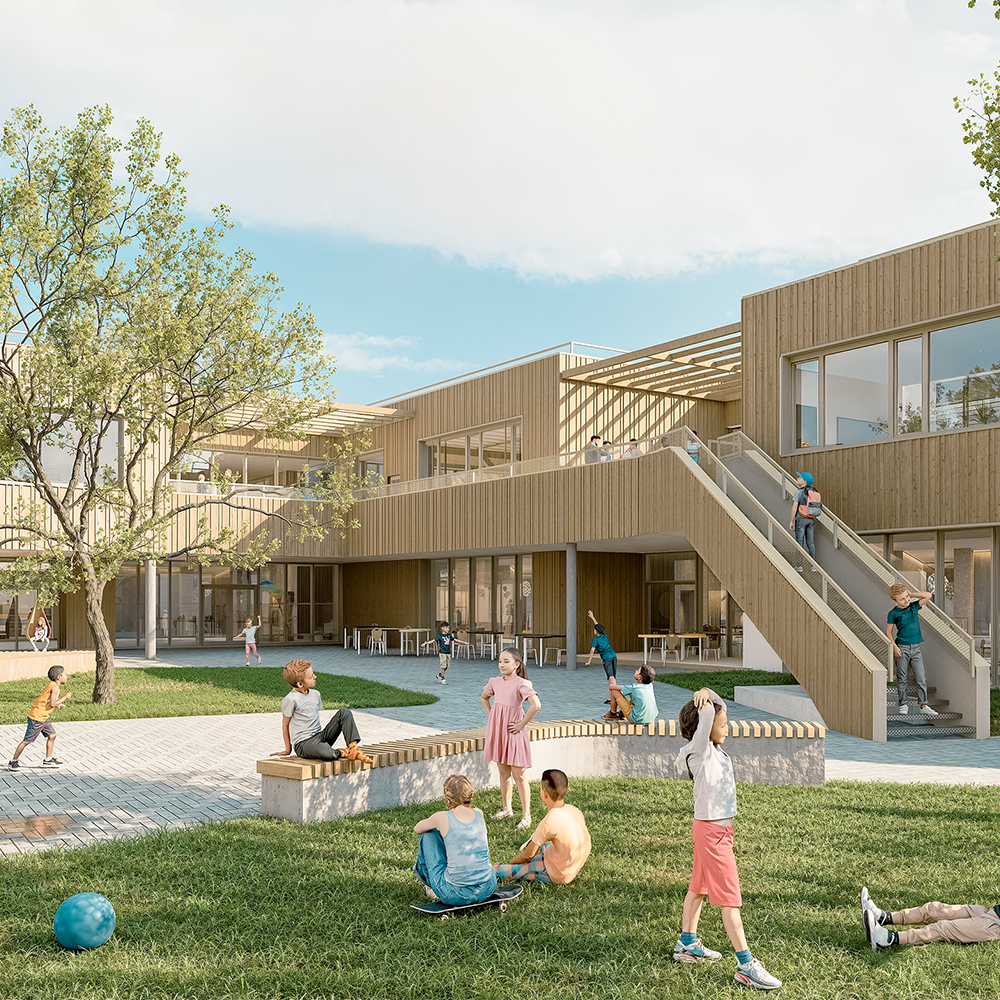
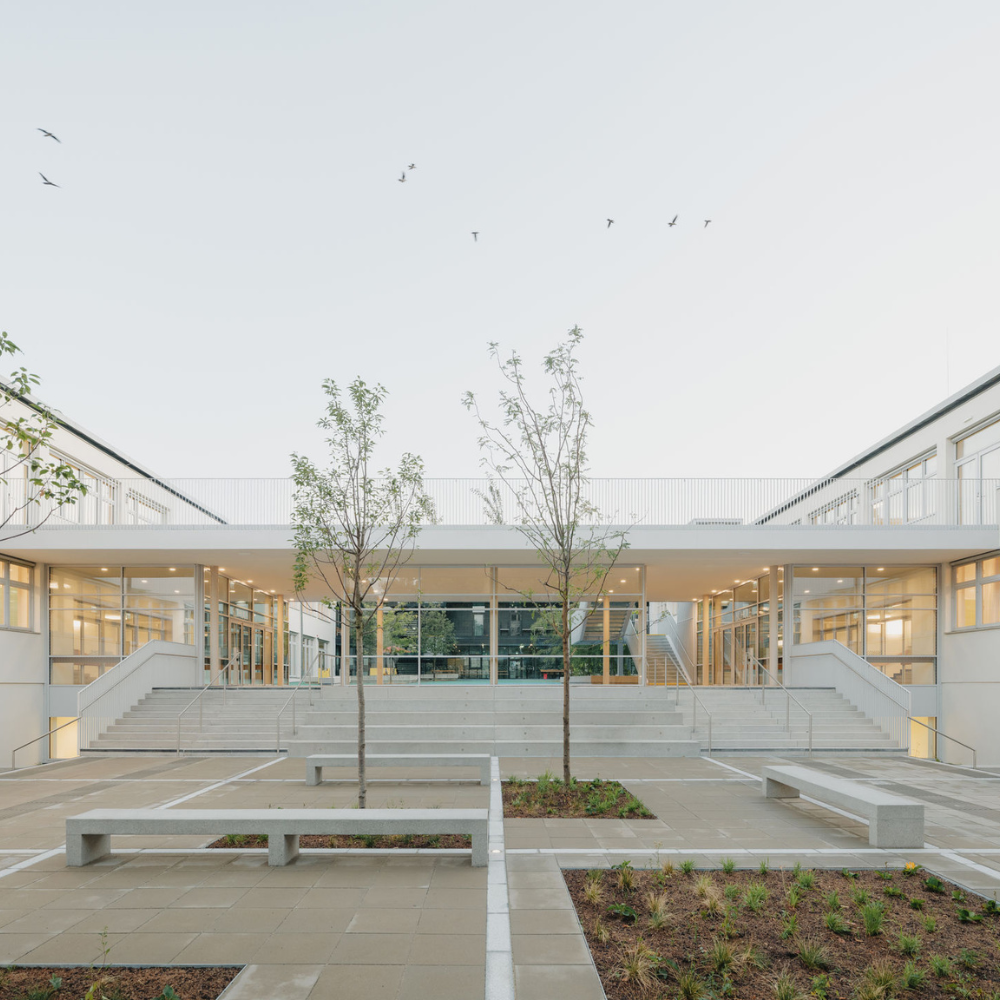
The design is defined by a compact, coherent building form that integrates respectfully into its existing surroundings. The square building volume generates three deliberately proportioned outdoor areas, including a sheltered therapy garden in the inner courtyard – a place of calm and recuperation. Access is provided via the existing entrance, optimizing traffic flow and enhancing safety across the site. Provision has also been made for future expansion, including additional parking.
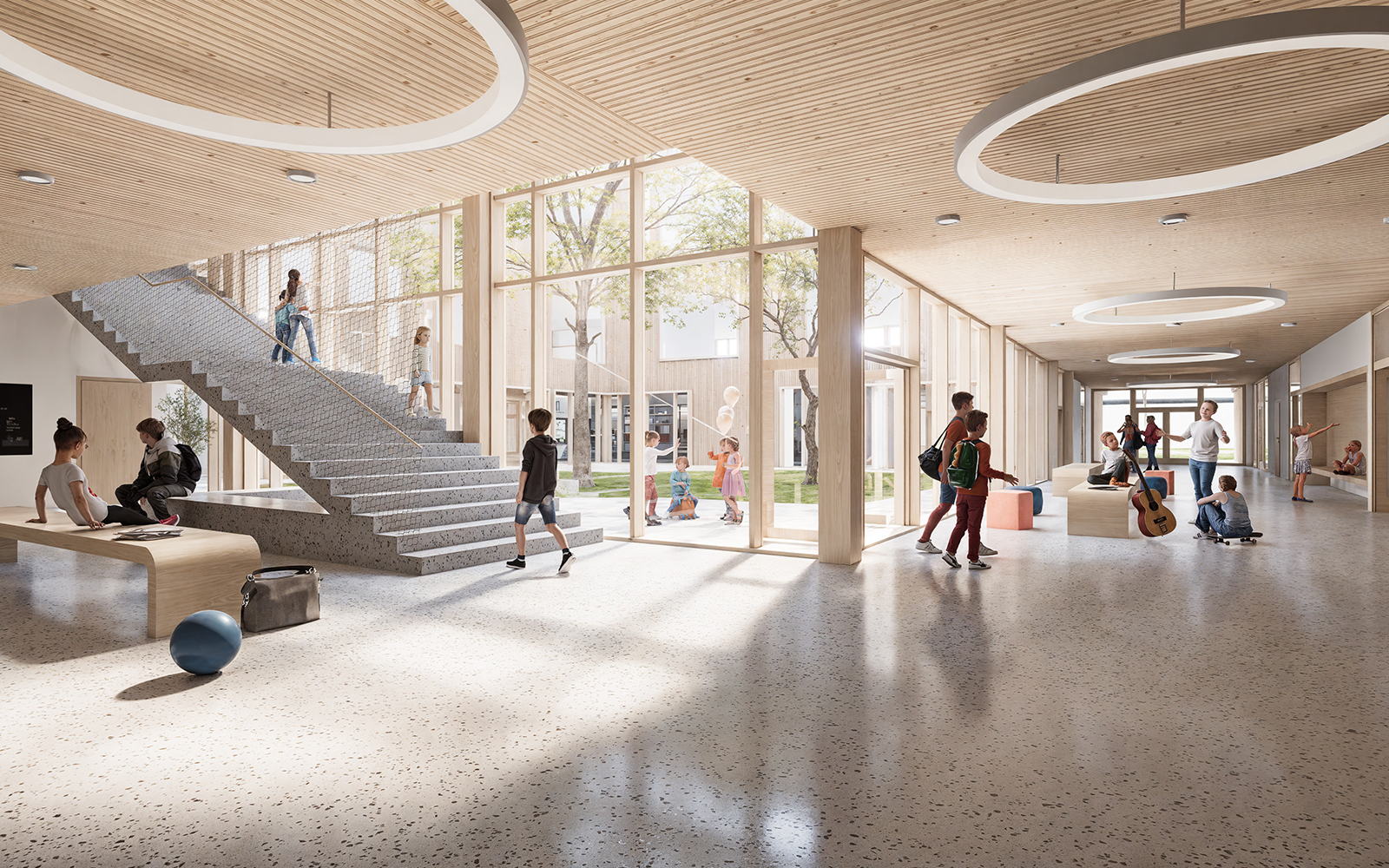
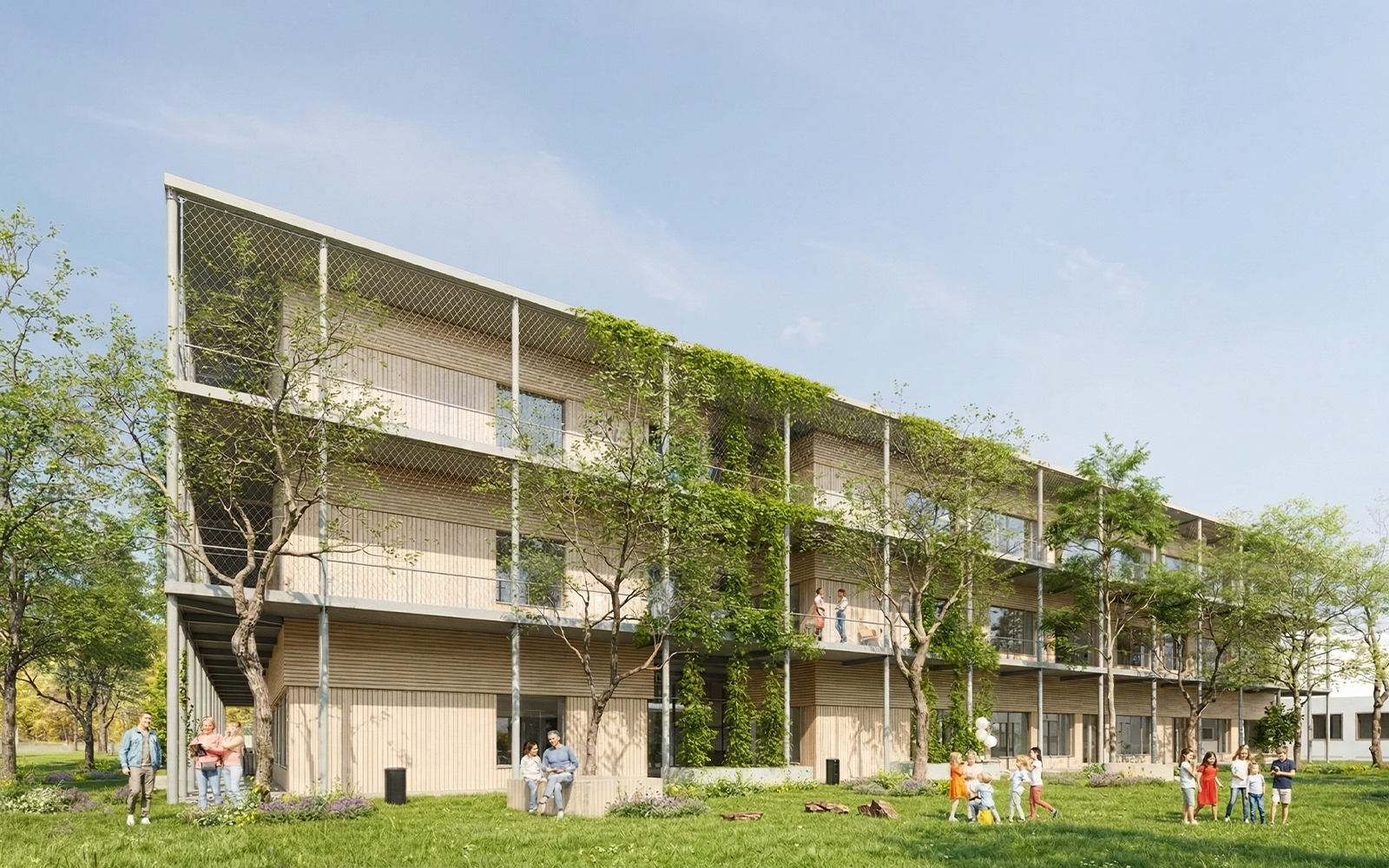
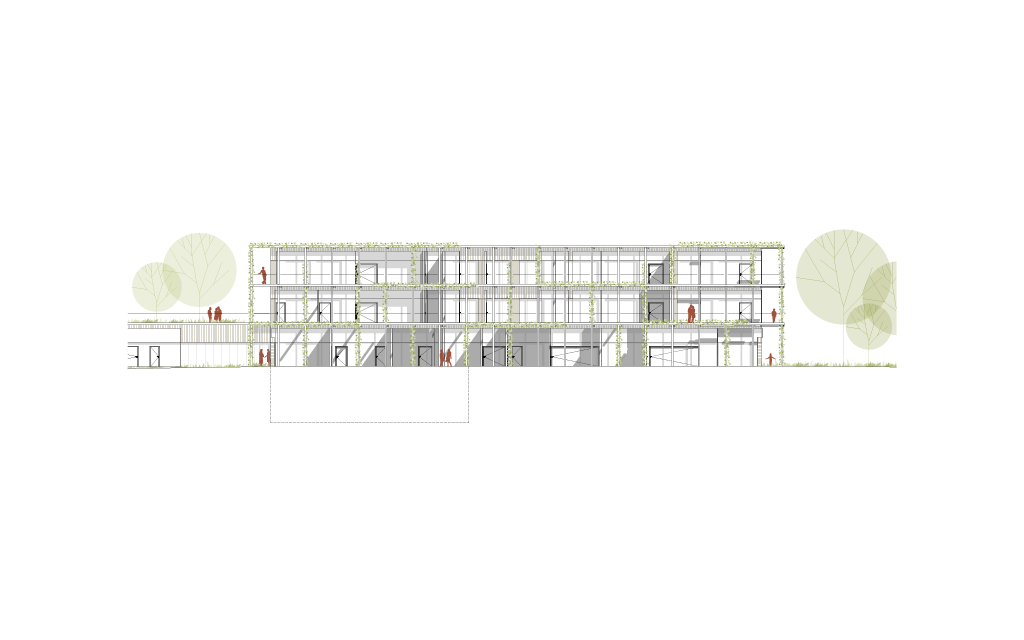
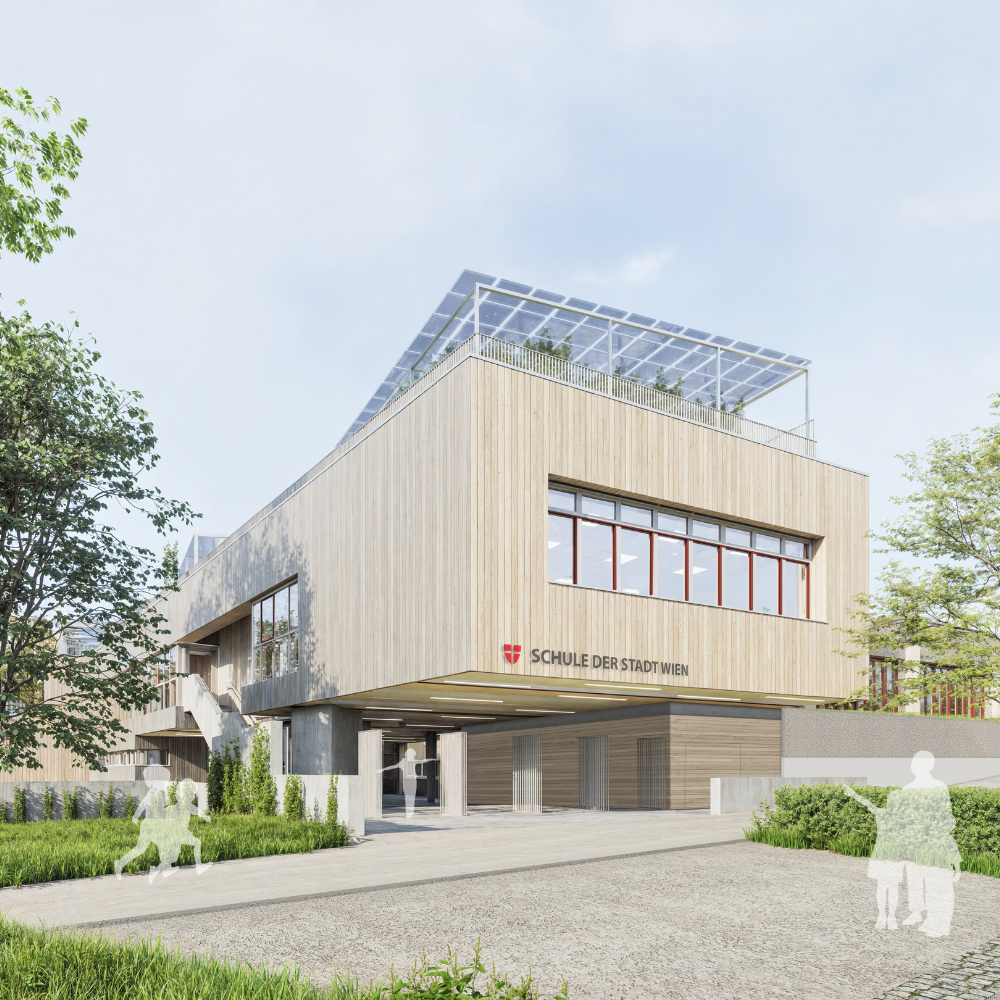
The architecture combines a restrained formal language with precise detailing. Landscaped balcony slabs and a larch wood façade contribute to the local microclimate, providing shade and weather protection. The interiors are bright, open, and defined by natural materials. A central atrium draws additional daylight deep into the building and establishes an inviting, communicative heart at its core.
The educational concept unfolds across three levels: two clusters are arranged around the atrium, while the therapy area on the ground floor enjoys direct access to the generous garden. A central staircase and open communal zones encourage encounter and exchange. The new building is connected to the existing structure in a fully accessible manner throughout.
Sustainability and the careful use of resources are fundamental to the design. Existing open spaces are largely preserved, while greened façades and rooftops enhance the microclimate. The hybrid timber-concrete structure, with its high degree of prefabrication, enables quiet construction methods and allows for a potential future vertical extension. The ecological energy concept draws on ground source heat probes, photovoltaics, and mechanical ventilation with heat recovery to create a healthy, energy-efficient interior climate.
Our ambition was to design a place that unites functionality, sustainability, and quality of experience – offering everyone who learns, works, and is cared for here a welcoming, safe, and inspiring environment.
The architecture combines a restrained formal language with precise detailing. Landscaped balcony slabs and a larch wood façade contribute to the local microclimate, providing shade and weather protection. The interiors are bright, open, and defined by natural materials. A central atrium draws additional daylight deep into the building and establishes an inviting, communicative heart at its core.
The educational concept unfolds across three levels: two clusters are arranged around the atrium, while the therapy area on the ground floor enjoys direct access to the generous garden. A central staircase and open communal zones encourage encounter and exchange. The new building is connected to the existing structure in a fully accessible manner throughout.
Sustainability and the careful use of resources are fundamental to the design. Existing open spaces are largely preserved, while greened façades and rooftops enhance the microclimate. The hybrid timber-concrete structure, with its high degree of prefabrication, enables quiet construction methods and allows for a potential future vertical extension. The ecological energy concept draws on ground source heat probes, photovoltaics, and mechanical ventilation with heat recovery to create a healthy, energy-efficient interior climate.
Our ambition was to design a place that unites functionality, sustainability, and quality of experience – offering everyone who learns, works, and is cared for here a welcoming, safe, and inspiring environment.
1st Prize
Campus Meißen
1st Prize
Primary school and School for Inclusive Education Castelligasse
1st Prize
Primary School and Middle School Florian-Hedorfer-Straße
1st Prize
Primary School
Dr. Skala-Straße
Dr. Skala-Straße
Primary School
Grinzinger Straße
Grinzinger Straße
Middle School
Enkplatz I+II
Enkplatz I+II
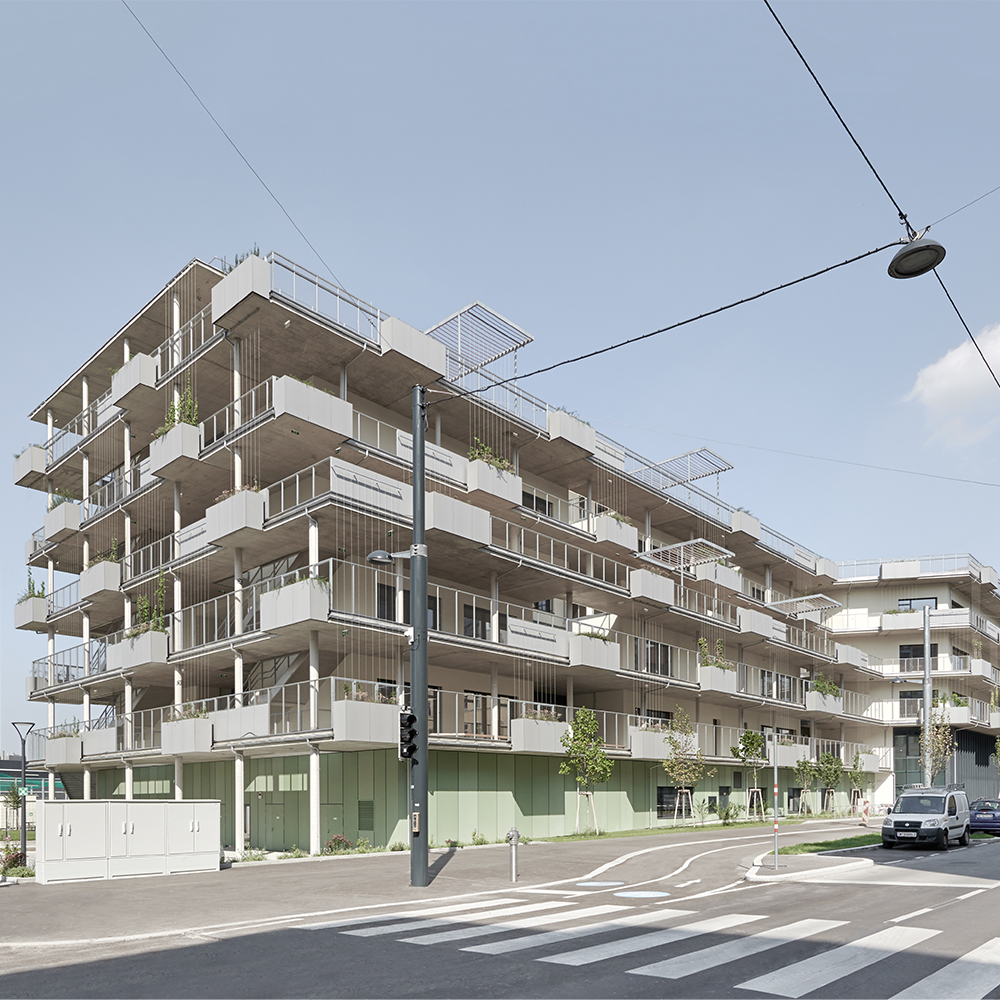
1st Prize
Campus Innerfavoriten
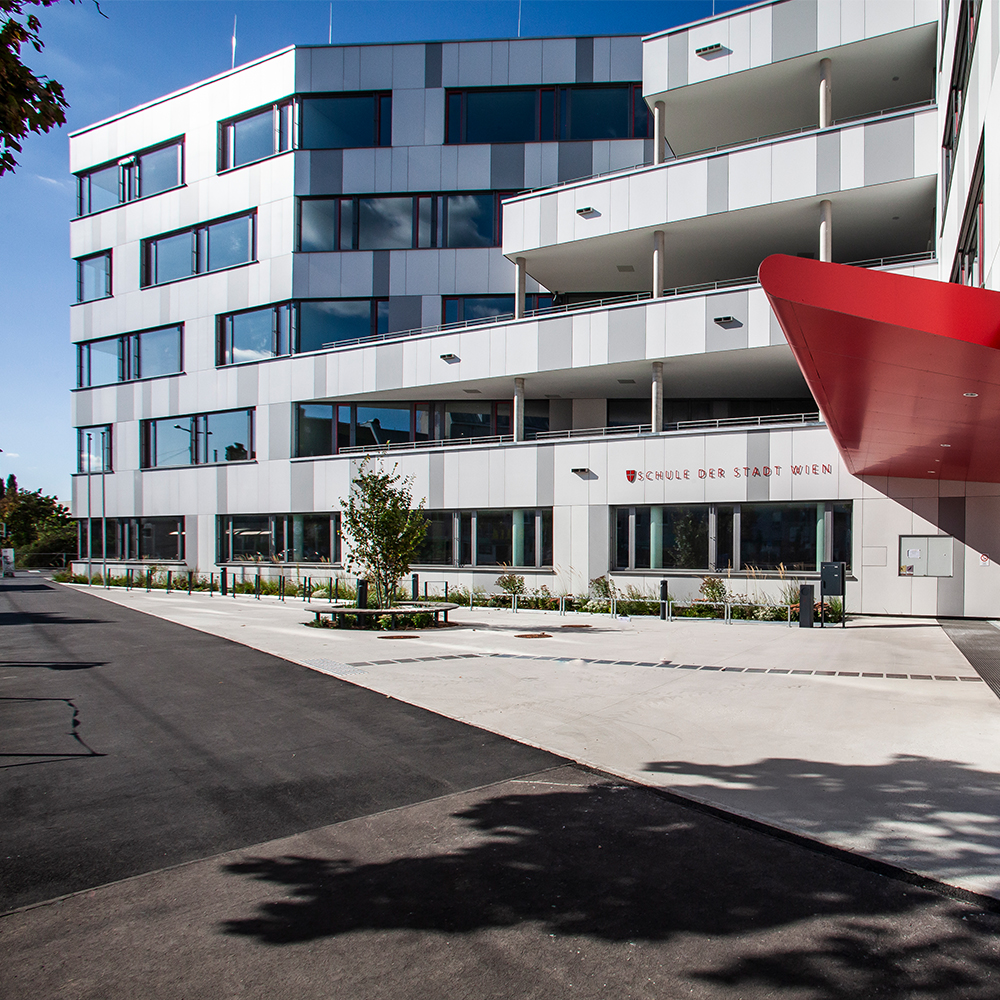
1st Prize
Primary School and Middle School Langobardenstraße
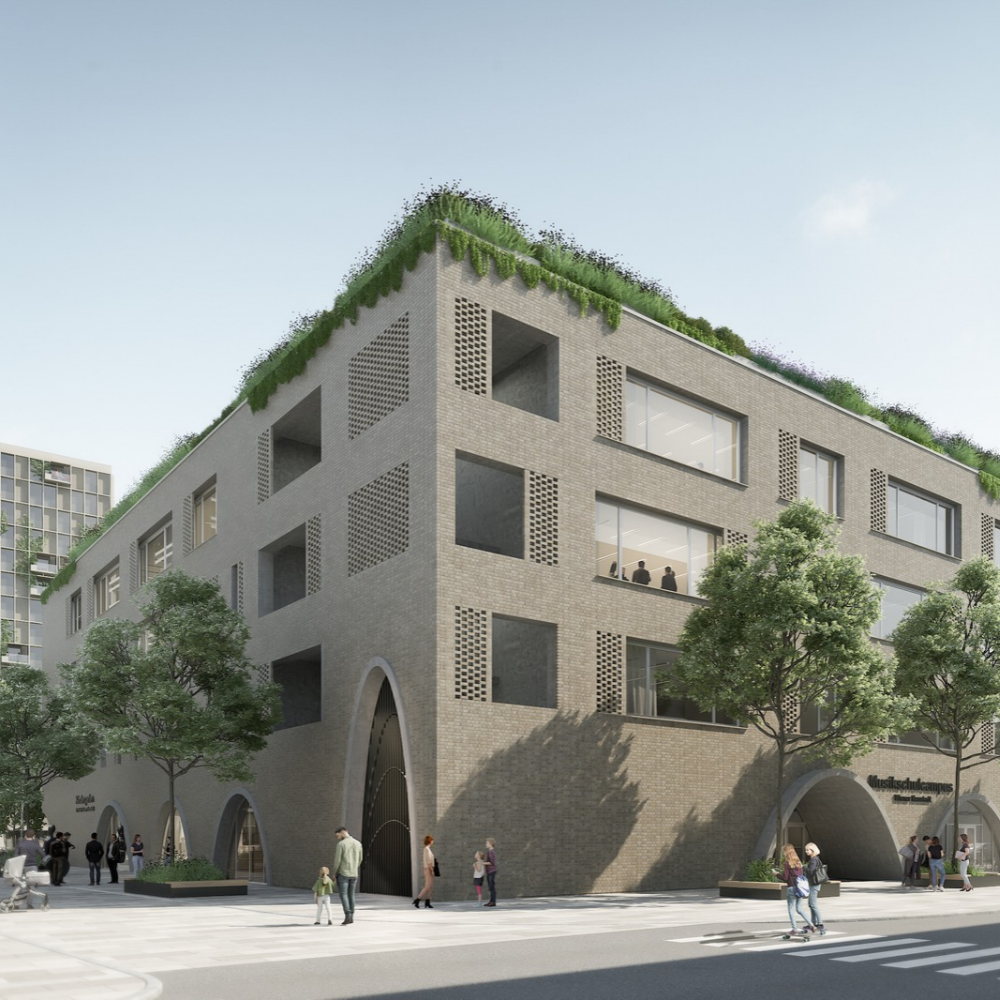
Music School Campus Wiener Neustadt
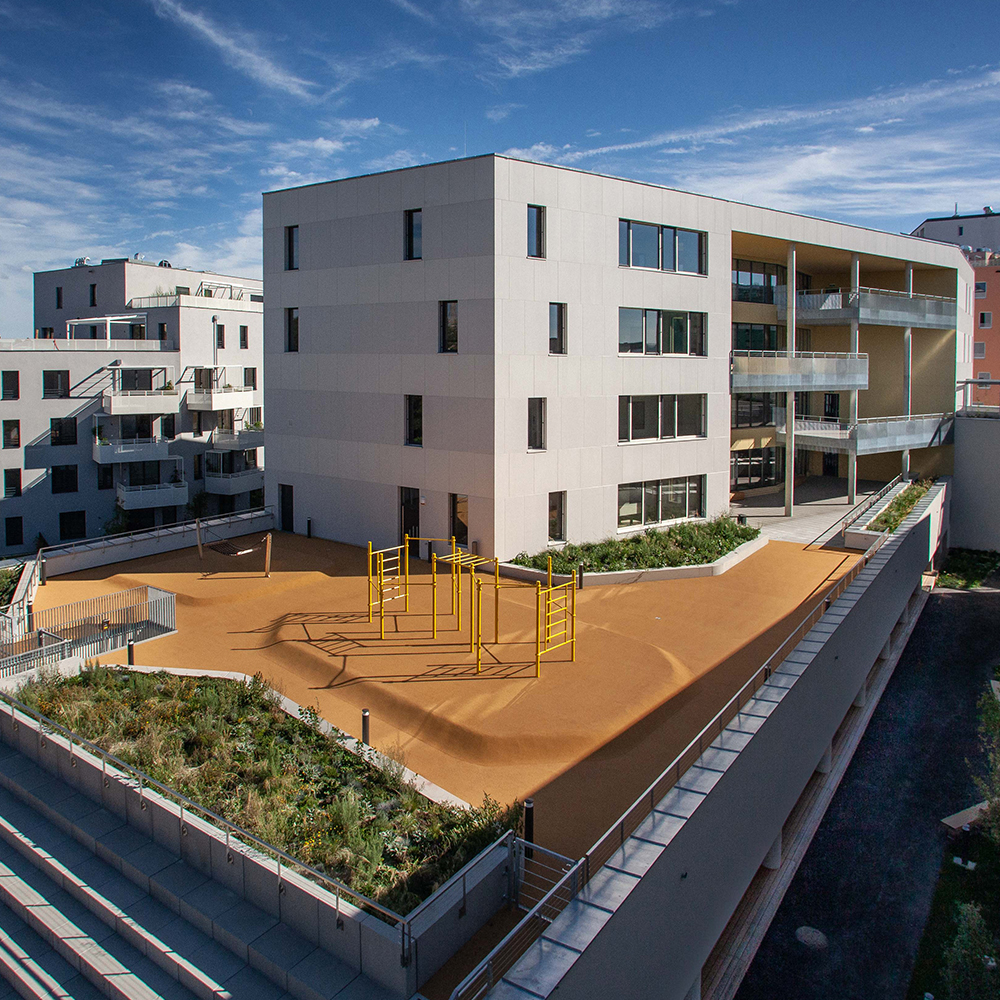
1st Prize
Middle School Wienerberg
1st Prize
Primary School and Middle School Grundäckergasse
1st Prize
Extension of the Jochbergengasse School
1st Prize
Primary School Christian-Bucher-Gasse
Kindergarten Pötzleinsdorf
Chamber of Labour Education and Training Centre
School buildings in timber construction
Waldschule
("Forest School")
("Forest School")
Primary School
Prückelmayrgasse
Prückelmayrgasse
Kindergarten Schrebergasse
Kindergarten
Anton-Schall-Gasse
Anton-Schall-Gasse