


Primary School Dr. Skala-Straße
2027
2027
Dr.-Skala-Straße 43-45, 1210 Wien
Competition 1st prize, 2023
Client:
Stadt Wien, MA56, Wiener Schulen
Area: 9.630 m² Bruttogrundfläche
Space allocation plan: Renovation and extension of the primary school Stammersdorf
Landscape Architecture:
Carla Lo Freiraum
Structural design, building physiscs,
building services, fire protection:
Vasko & Partner
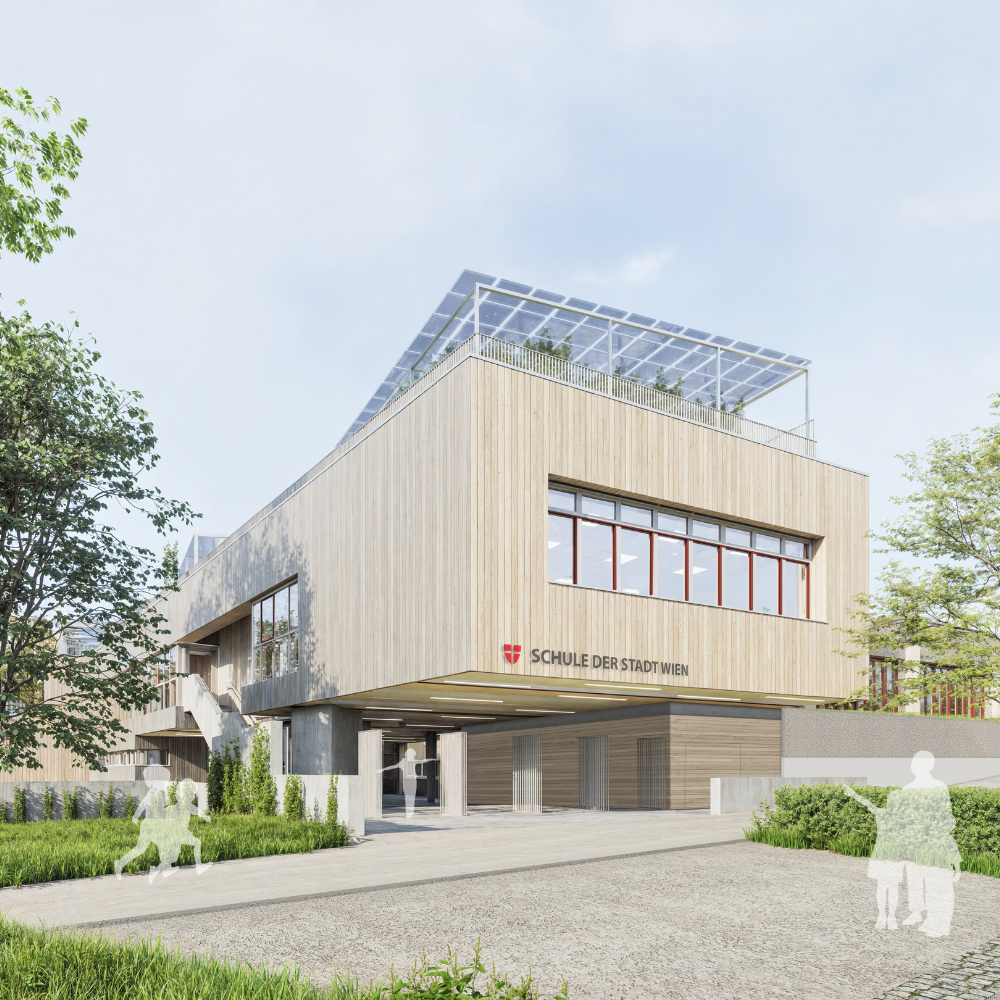
The building, originally constructed in 1958 as a primary and middle school, is undergoing comprehensive renovation and will be extended with a new addition. The number of classrooms will grow from 14 to 22, expanding the possibilities for modern, contemporary learning. The existing spatial layout is being transformed into a forward-thinking, cluster-based learning concept that equally supports encounter, collaboration, and individual development. The structural and spatial characteristics of the existing building allow modern pedagogical concepts to be implemented with minimal intervention — and will be upgraded to offer the same high standard of quality as the newly constructed sections.
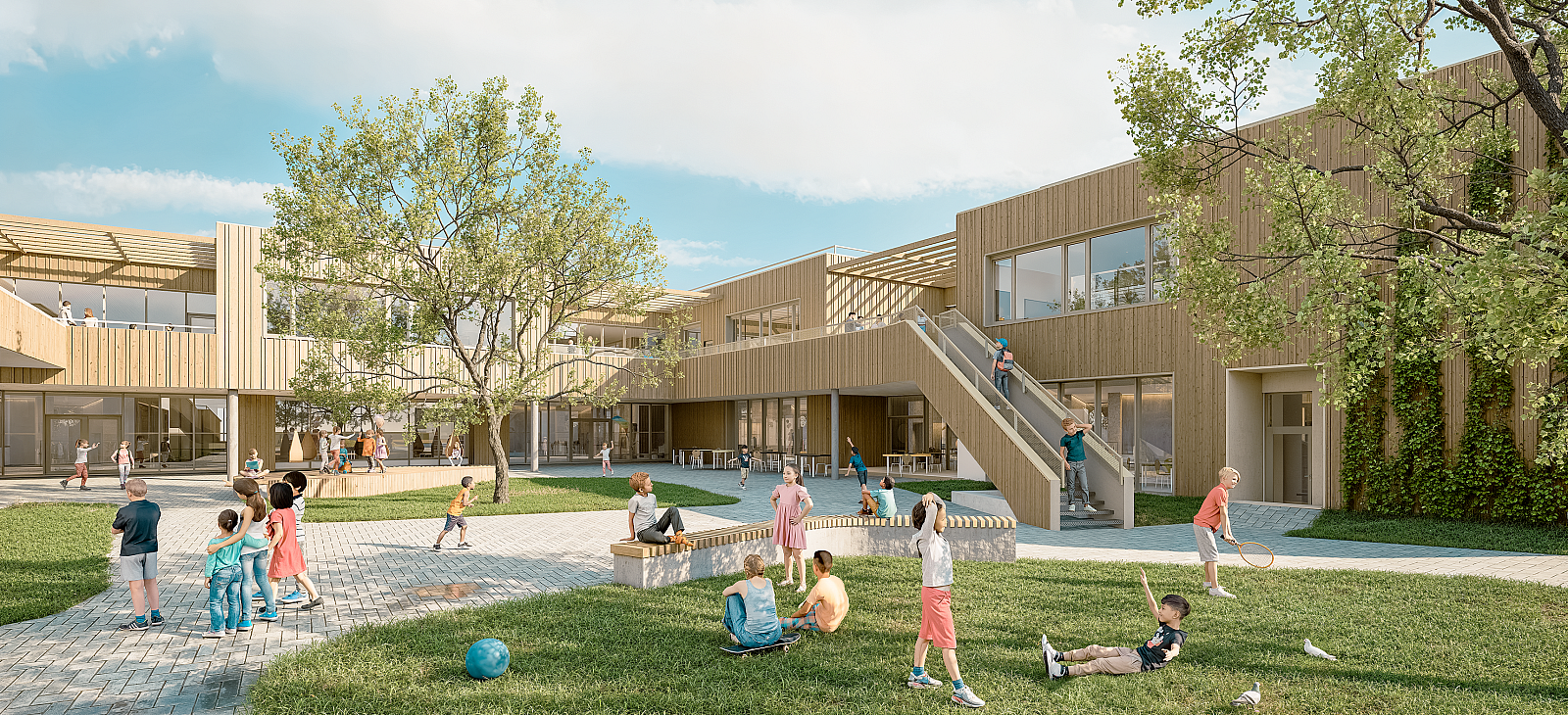
The redesign gives the building a new identity: a ventilated larch wood façade establishes the school as a recognizable public landmark, introducing a warm and inviting presence within the heterogeneous surroundings of a residential neighborhood. Façade greening improves the local microclimate and allows the building to organically merge with the schoolyard. Terraced recesses on the street-facing side articulate the building's form and respond sensitively to the fine-grained scale of the neighboring context.
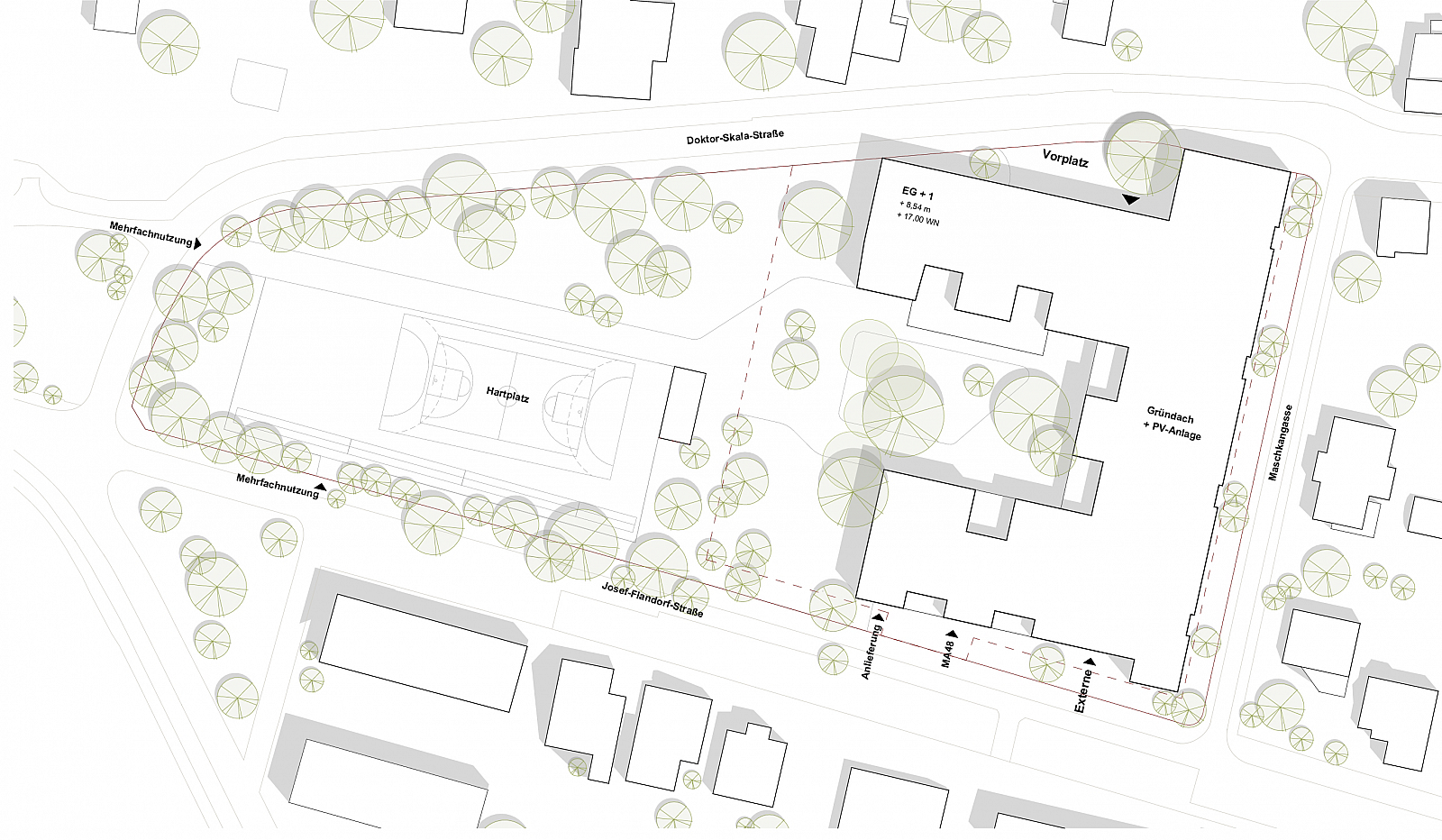
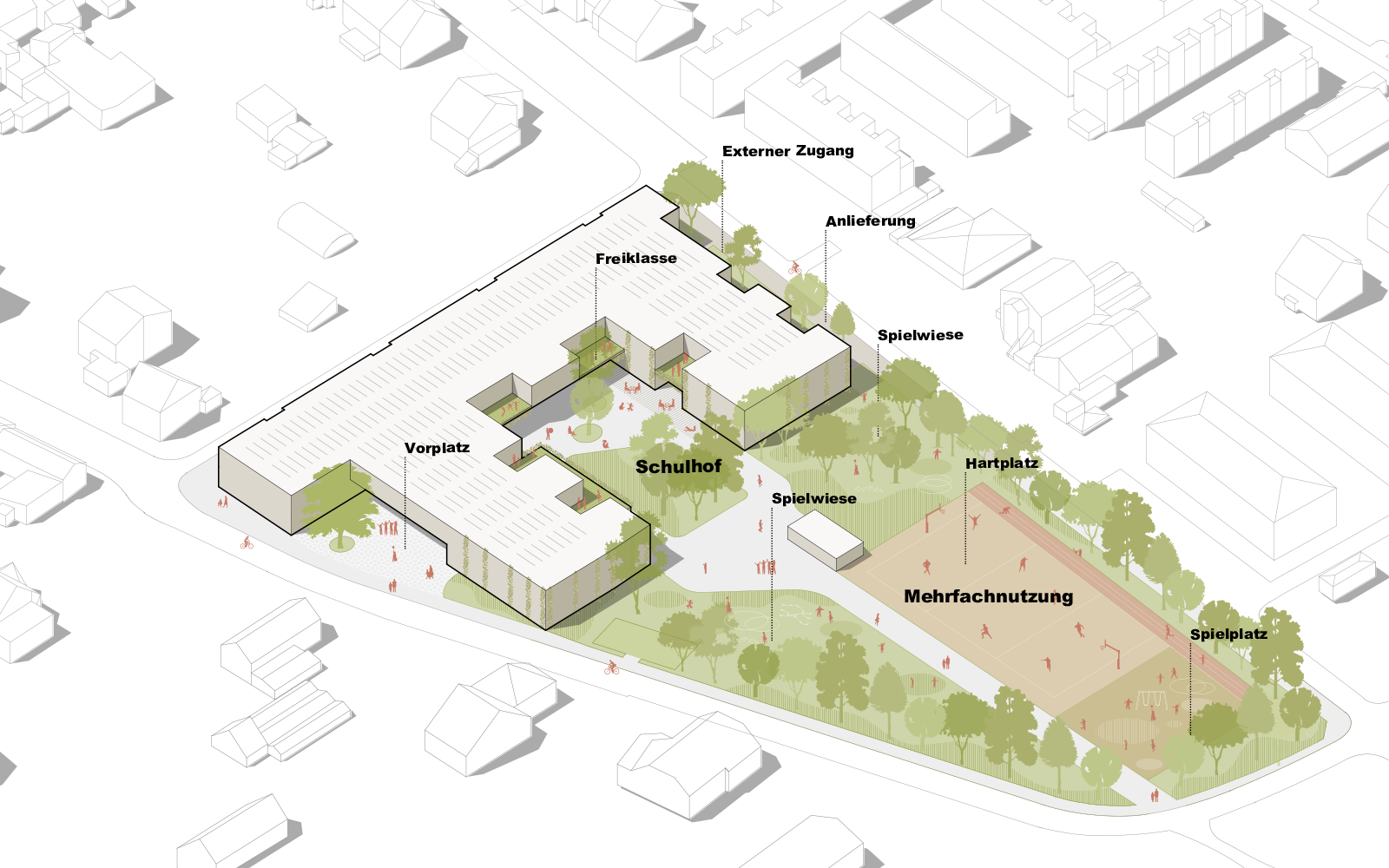
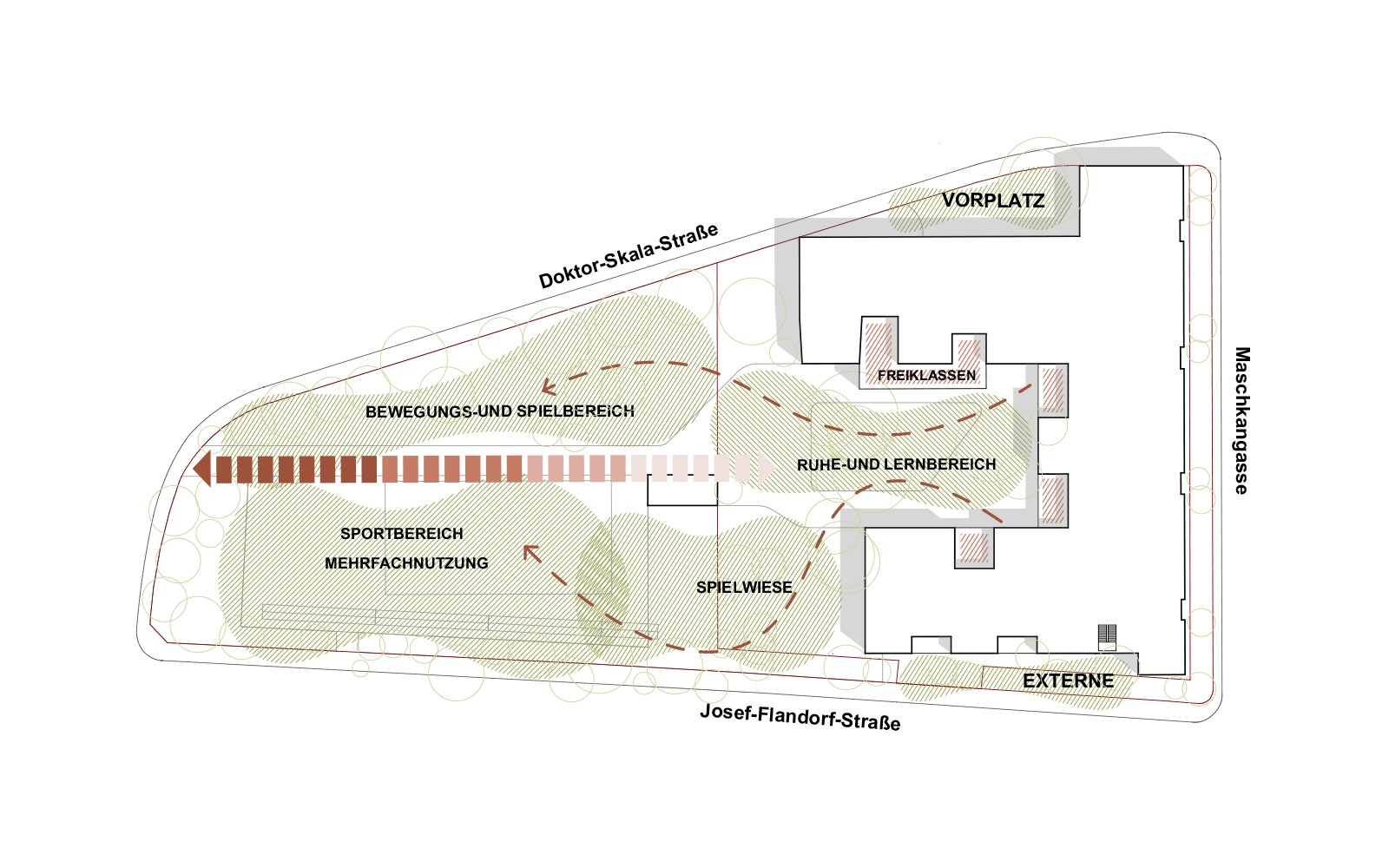
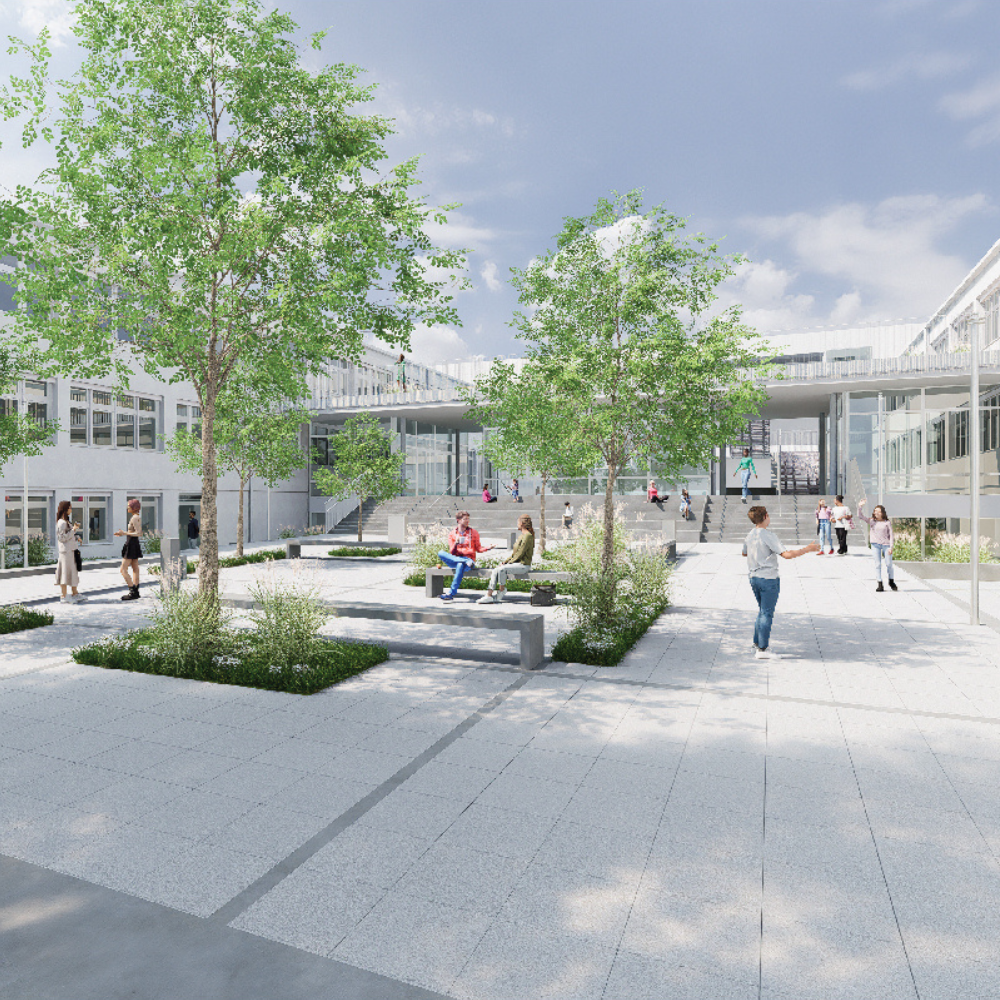
Our design is guided by the ambition to maximize space for play, movement, and outdoor gathering. Through a compact building footprint and optimized circulation areas, generous, interconnected open spaces are created — offering children room to learn, play, and explore together, both inside and out.
The redesign gives the building a new identity: a ventilated larch wood façade establishes the school as a recognizable public landmark, introducing a warm and inviting presence within the heterogeneous surroundings of a residential neighborhood. Façade greening improves the local microclimate and allows the building to organically merge with the schoolyard. Terraced recesses on the street-facing side articulate the building's form and respond sensitively to the fine-grained scale of the neighboring context.
Our design is guided by the ambition to maximize space for play, movement, and outdoor gathering. Through a compact building footprint and optimized circulation areas, generous, interconnected open spaces are created — offering children room to learn, play, and explore together, both inside and out.
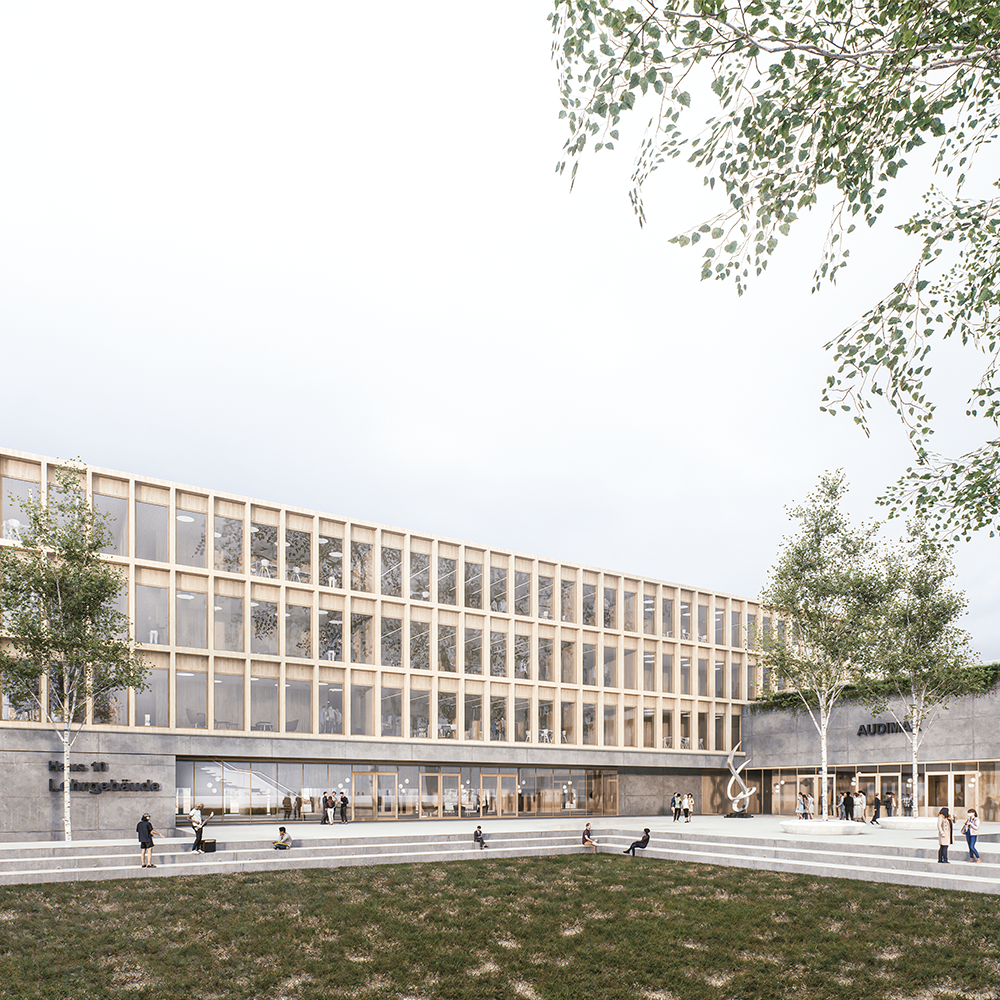
1st Prize
Campus Meißen
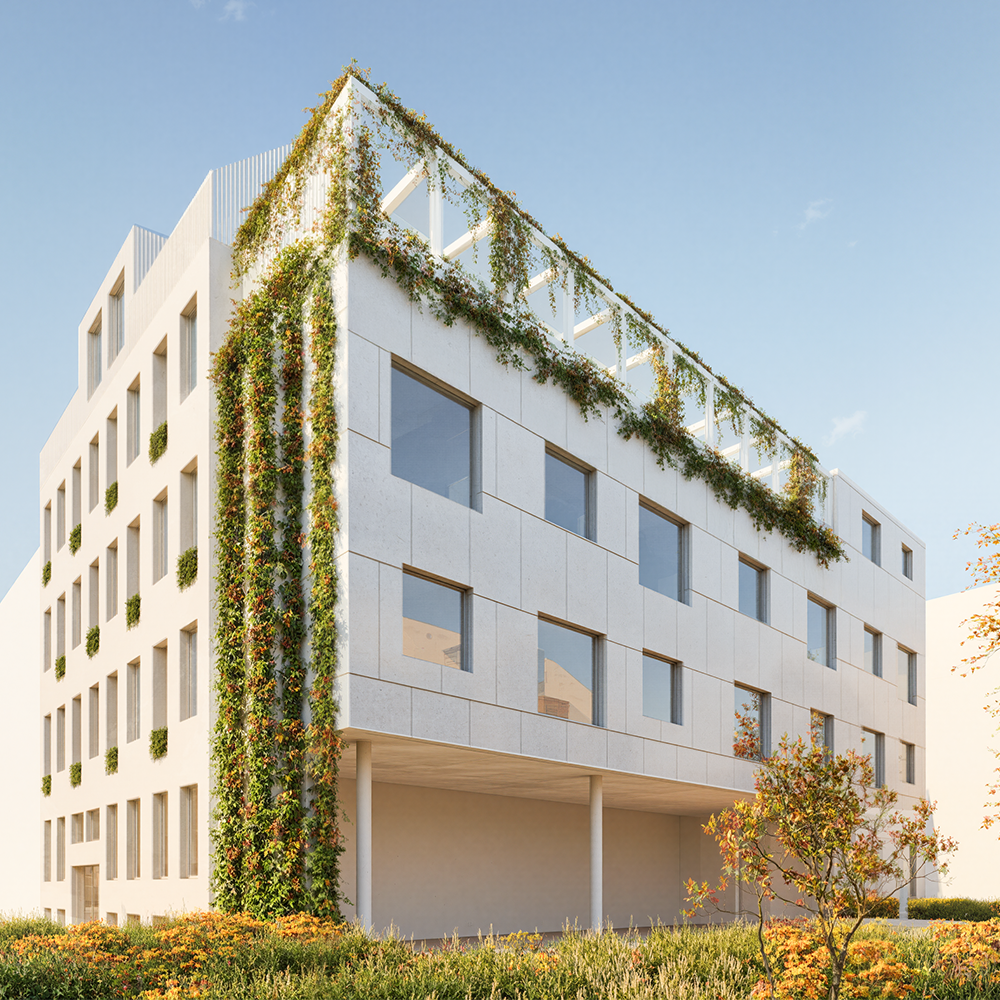
1st Prize
Primary school and School for Inclusive Education Castelligasse
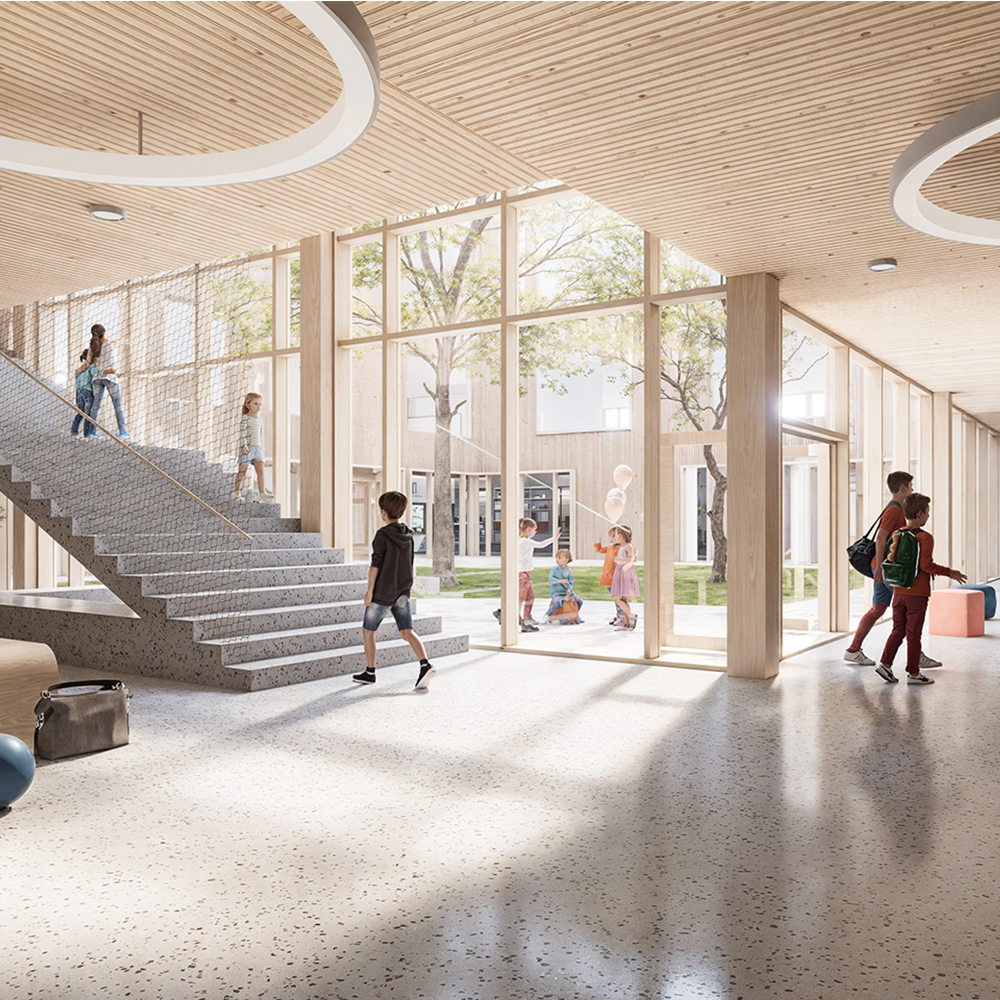
1st Prize
Primary School and Middle School Florian-Hedorfer-Straße
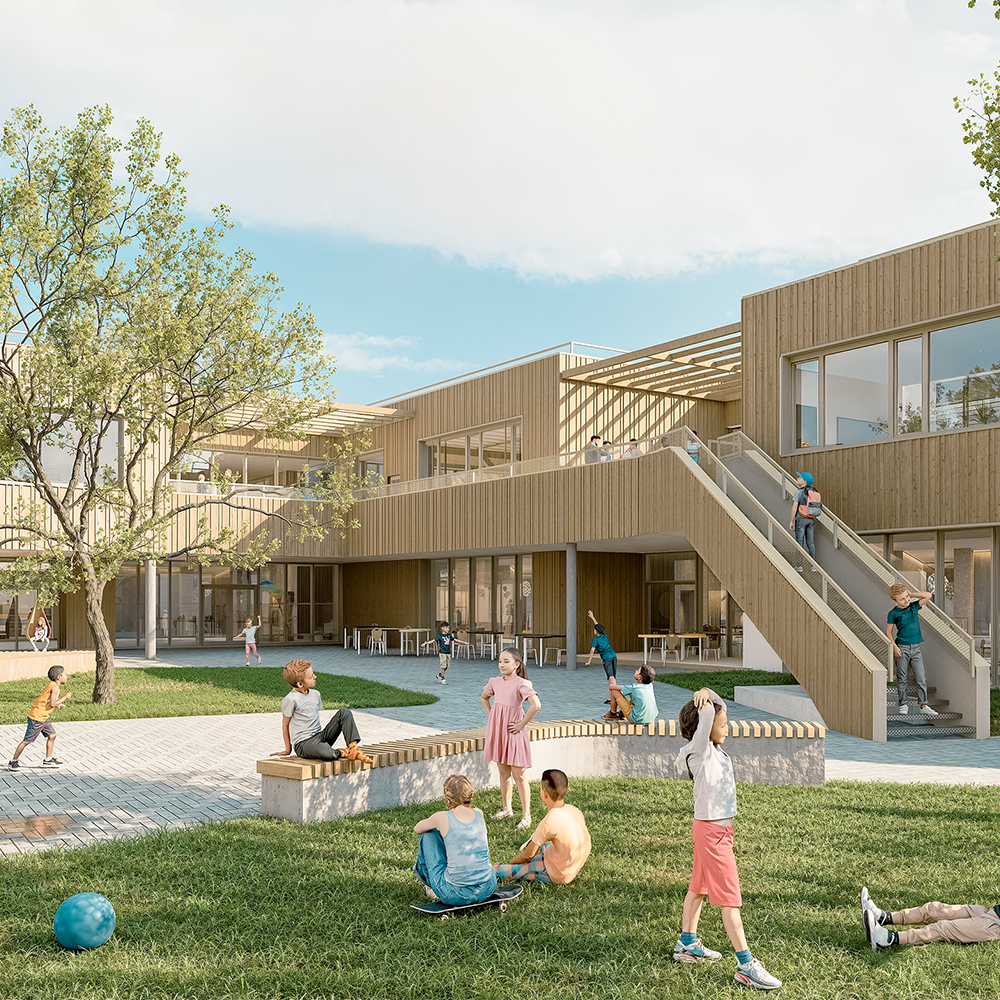
1st Prize
Primary School
Dr. Skala-Straße
Dr. Skala-Straße
Primary School
Grinzinger Straße
Grinzinger Straße
Middle School
Enkplatz I+II
Enkplatz I+II
1st Prize
Campus Innerfavoriten
1st Prize
Primary School and Middle School Langobardenstraße
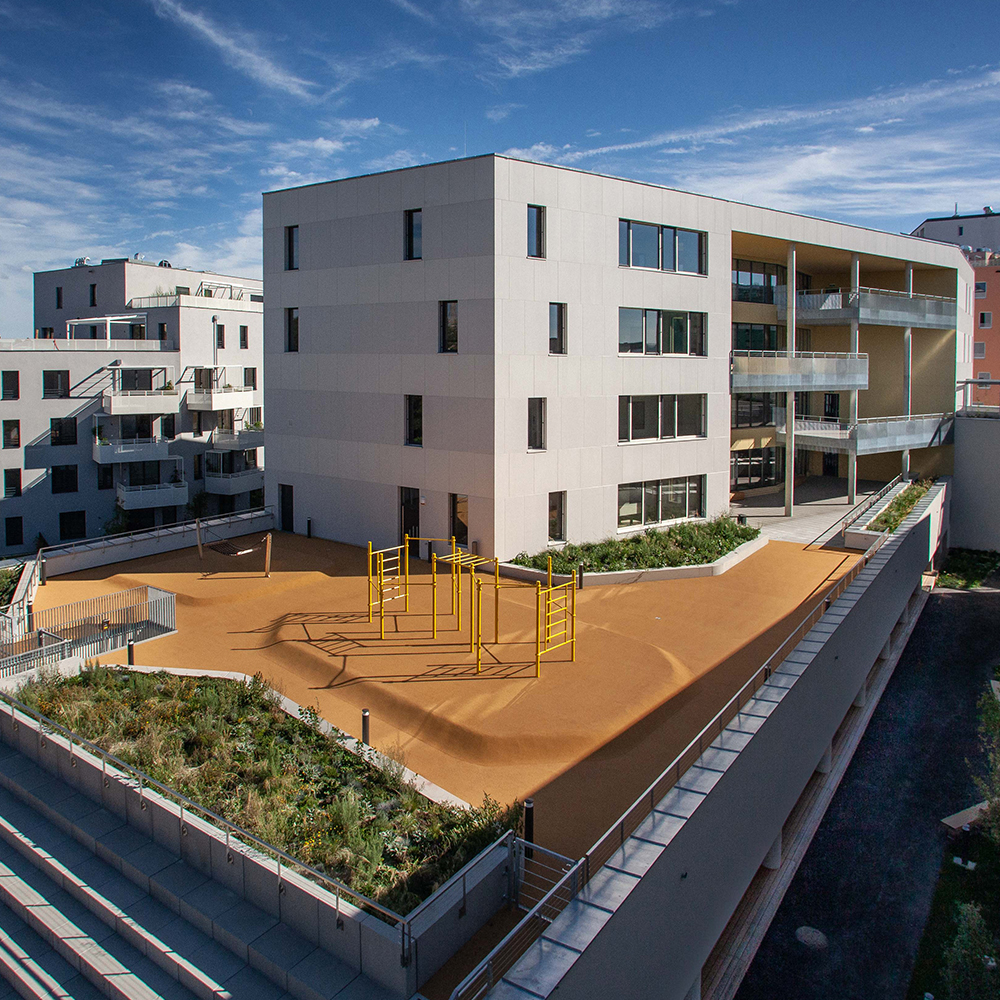
1st Prize
Middle School Wienerberg
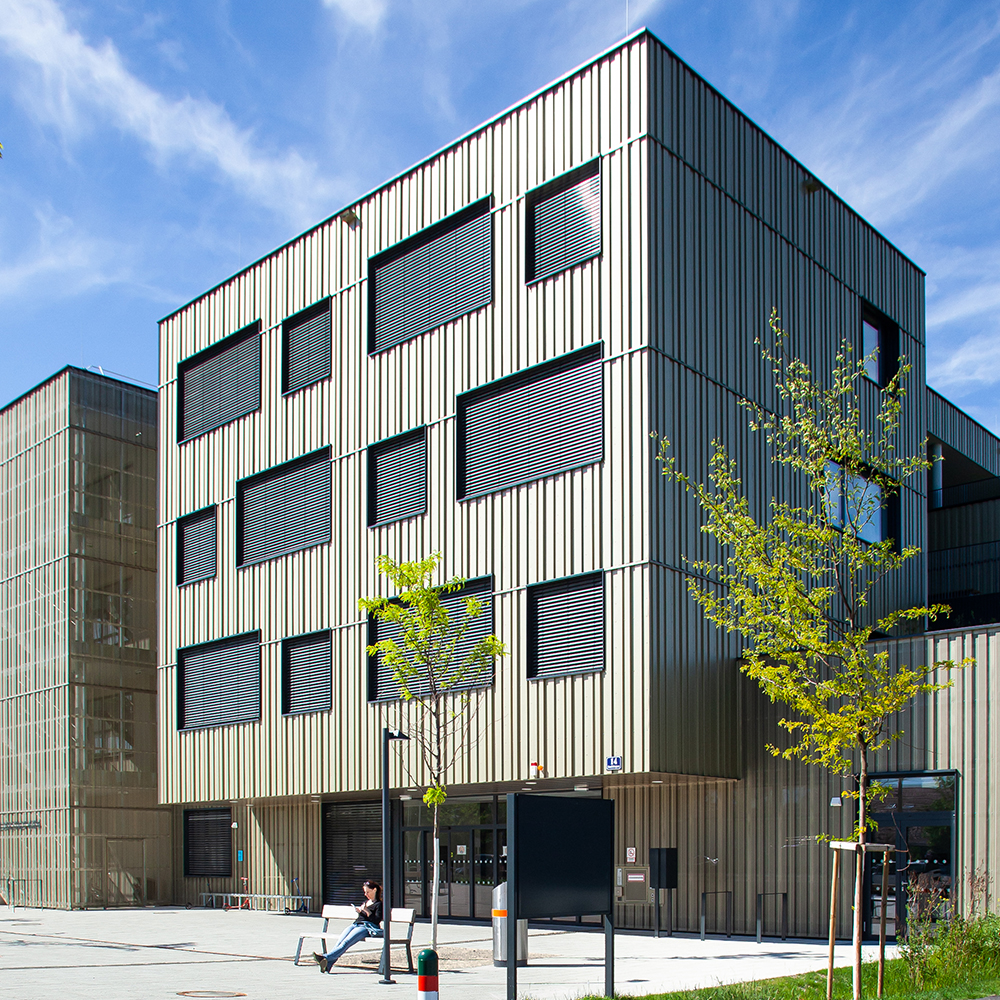
1st Prize
Primary School and Middle School Grundäckergasse
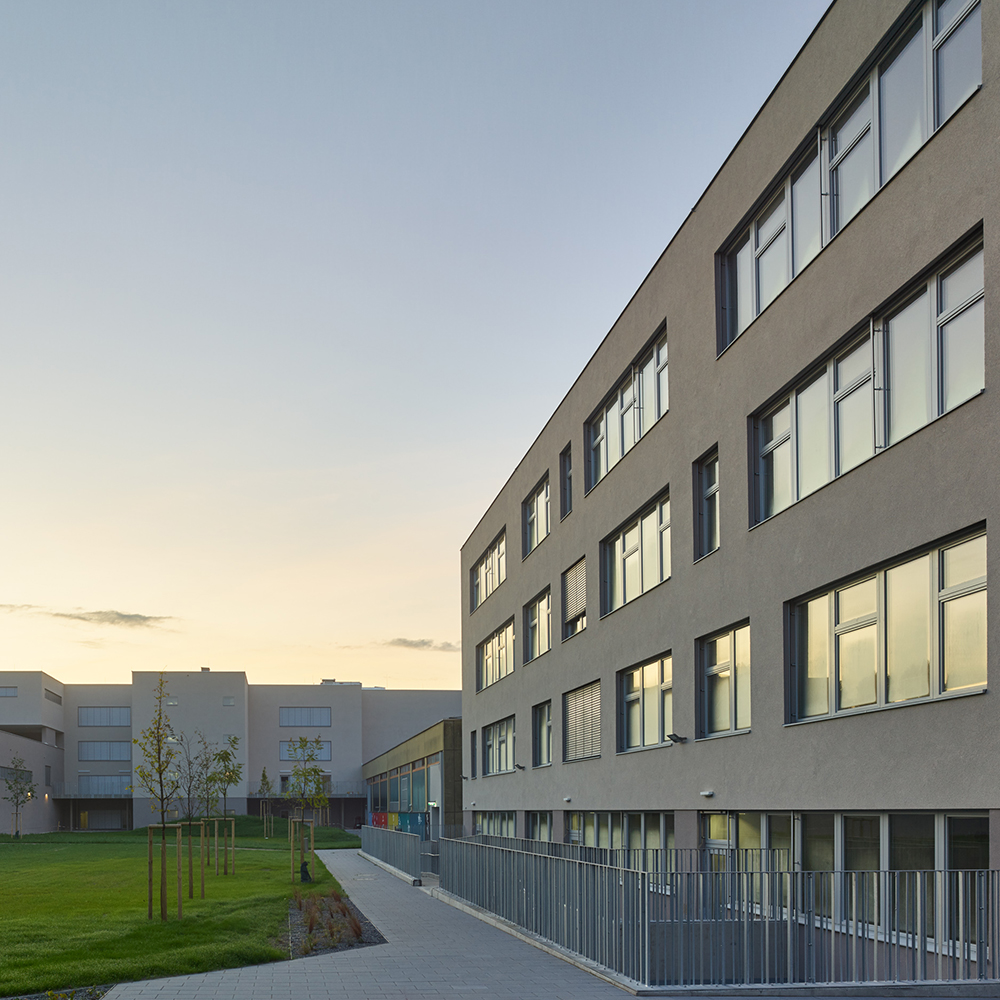
1st Prize
Extension of the Jochbergengasse School
1st Prize
Primary School Christian-Bucher-Gasse
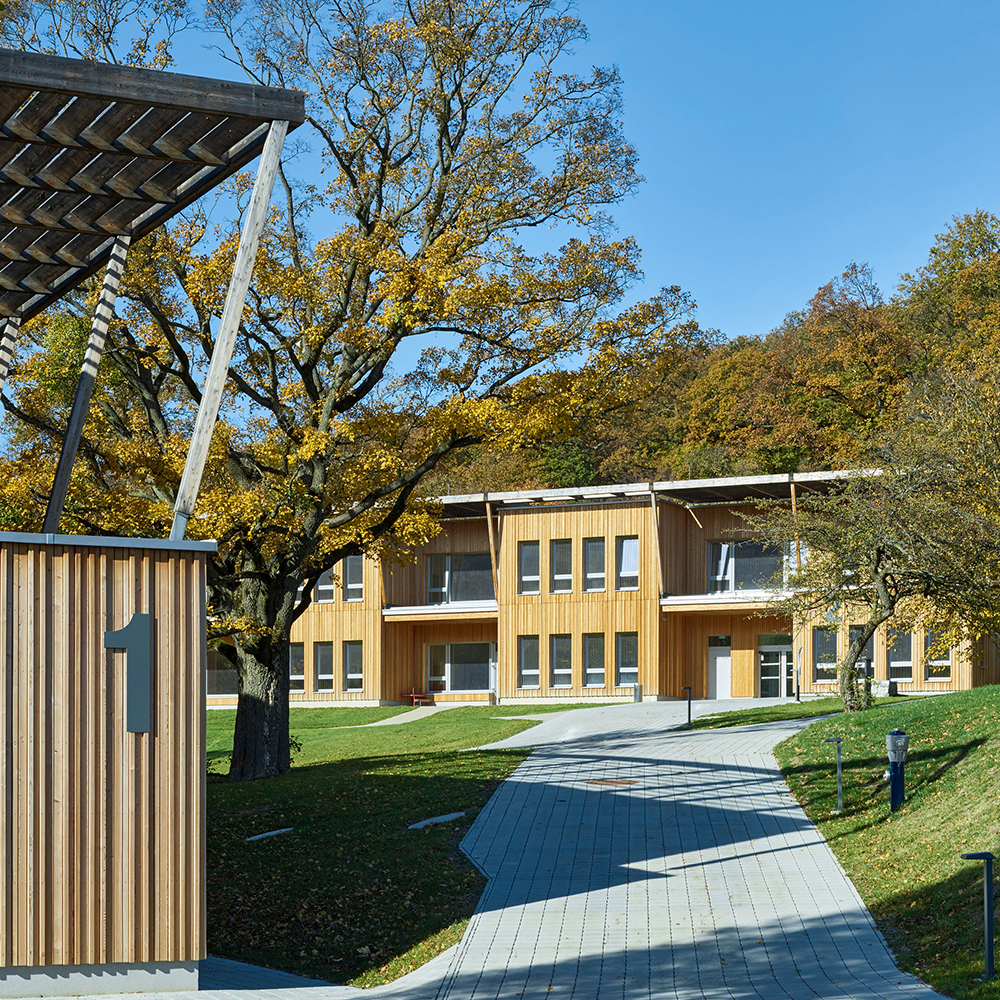
Kindergarten Pötzleinsdorf
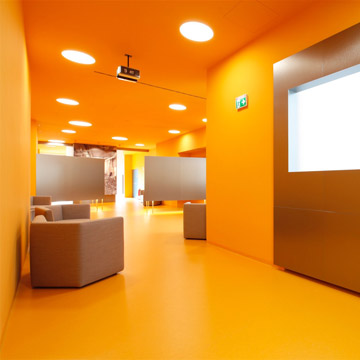
Chamber of Labour Education and Training Centre
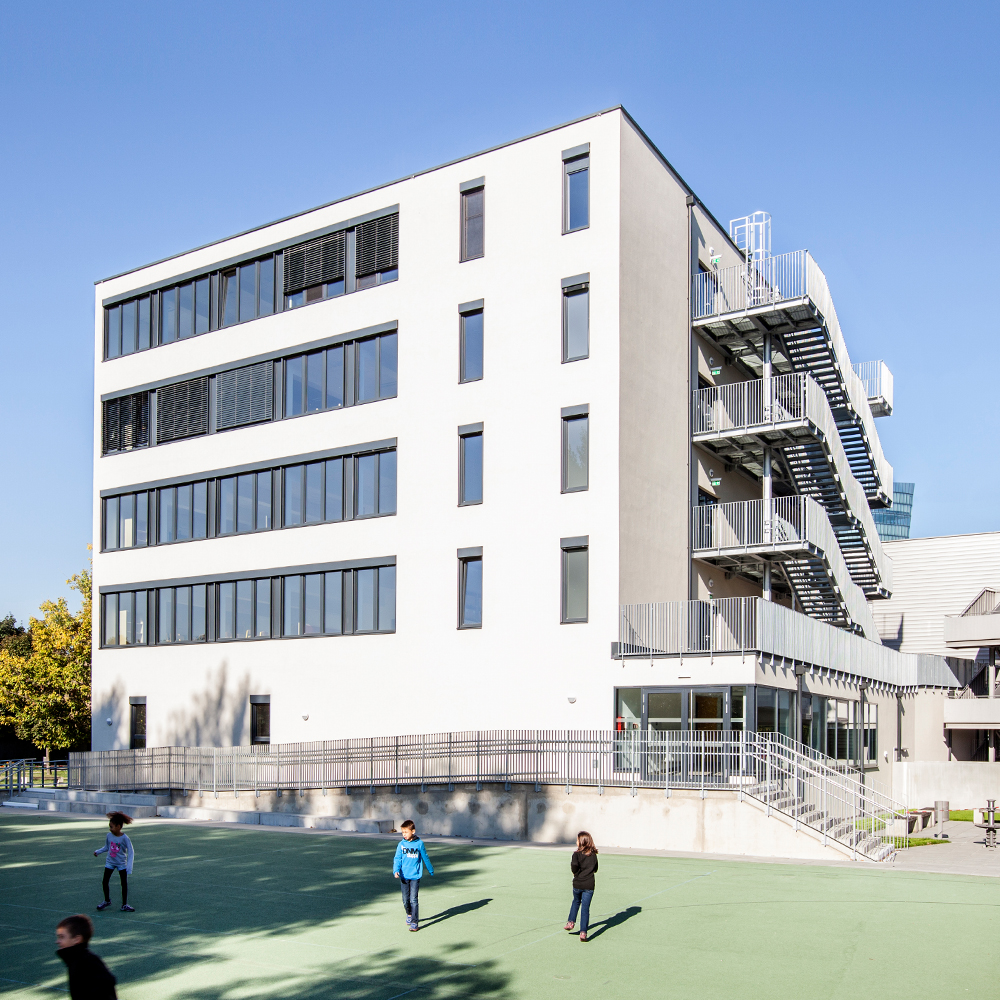
School buildings in timber construction
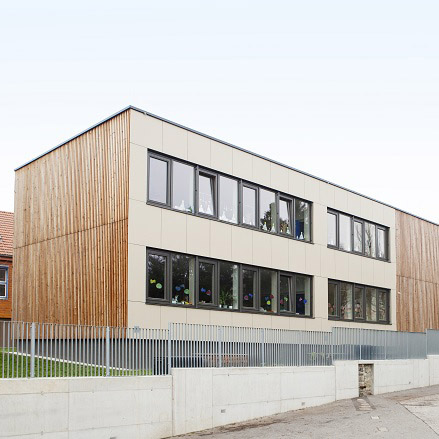
Waldschule
("Forest School")
("Forest School")
Primary School
Prückelmayrgasse
Prückelmayrgasse
Kindergarten Schrebergasse
Kindergarten
Anton-Schall-Gasse
Anton-Schall-Gasse